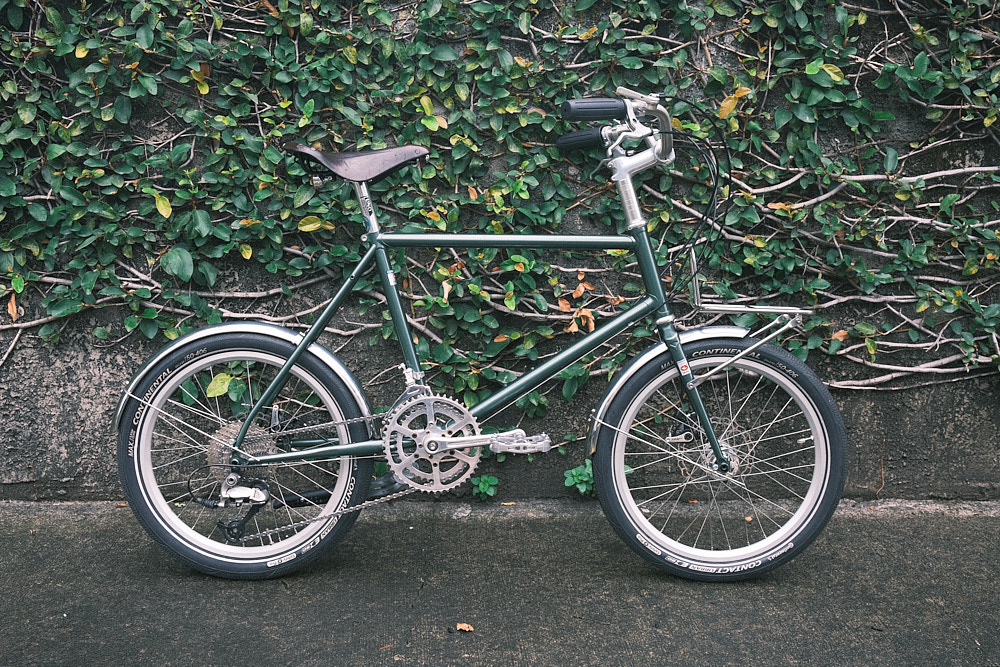

Bicycles come in all shapes and sizes. One of the more interesting kinds is the mini velo.
Translating to “small bicycle,” the compound term refers to a bike with small wheels. Unlike folding bikes, mini velos have rigid frames shaped more like those of conventional bicycles. They might share the same wheel size as a BMX, but they aren’t meant for stunt riding.
I’ve always wanted to try a mini velo, but never got the opportunity because it’s not a common bike. That is, until a friend had one custom-made by Ave Maldea (or Mang Ave).
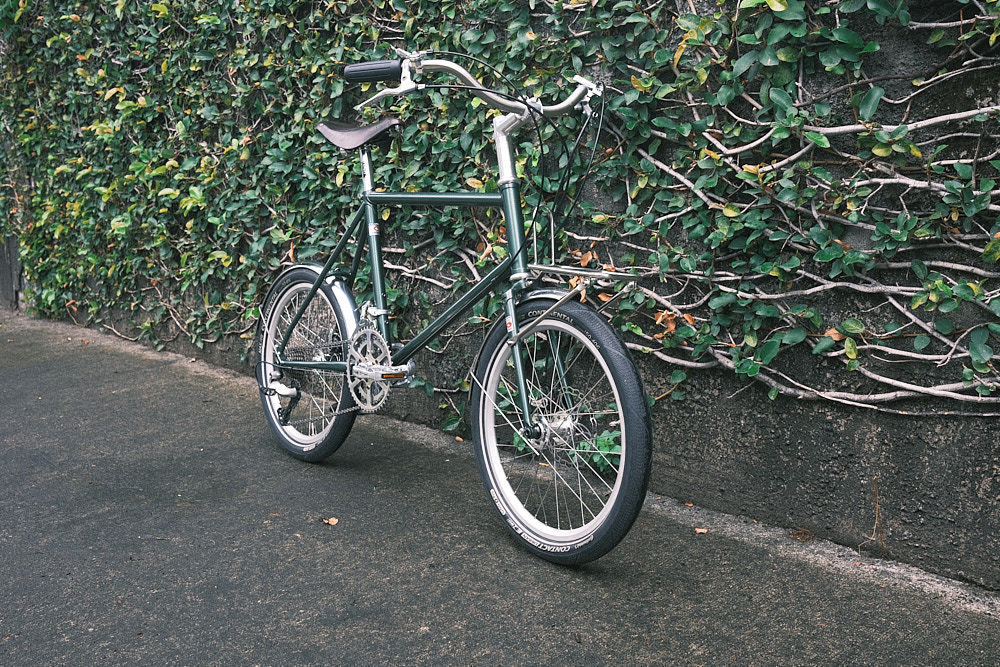
Mang Ave is arguably the most reputable framebuilder locally. If you want a custom bike, there’s a good chance he can make what you want—provided that it’s made of steel.
My friend always wanted a mini velo, but she had a few requirements that only a custom builder could fulfill: The frame had to be lugged with a horizontal top tube, and it needed modern standards such as flat-mount disc brakes and thru-axle dropouts.
She ordered the frame in January, and it was finished by mid-February. Before it could be delivered to the owner, the bike was painted by Rodelio Mercado (or Mang Buboy). We chose him because he did a great job with my Bridgestone Eurasia. His colors are based on cars from the 1990s and the 2000s, which create a classic and timeless look.
The frameset was only built recently. But I must say the end result was worth the wait (and also the price tag).
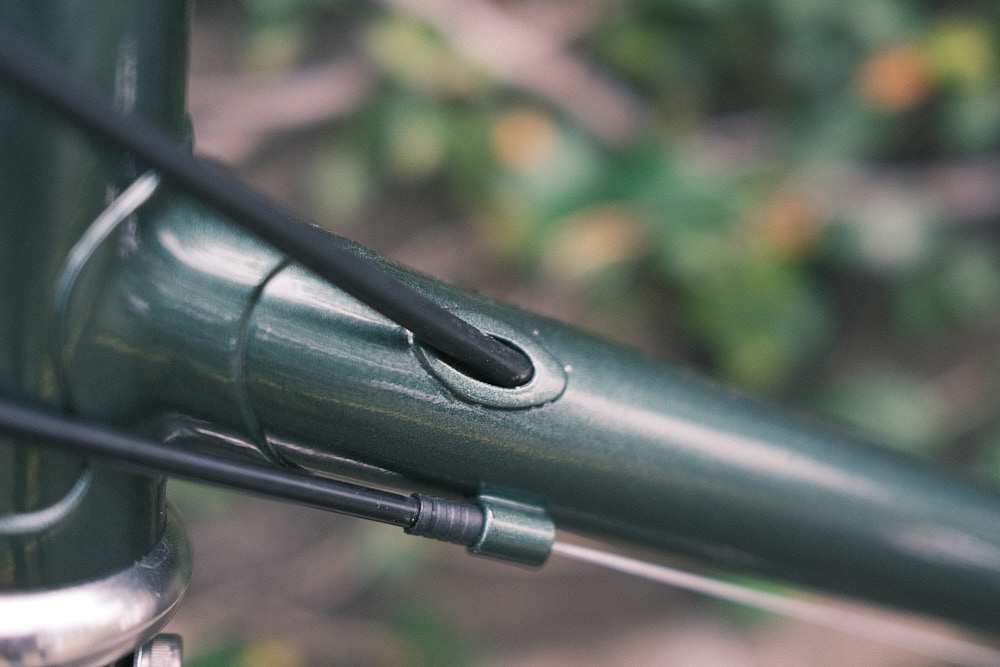
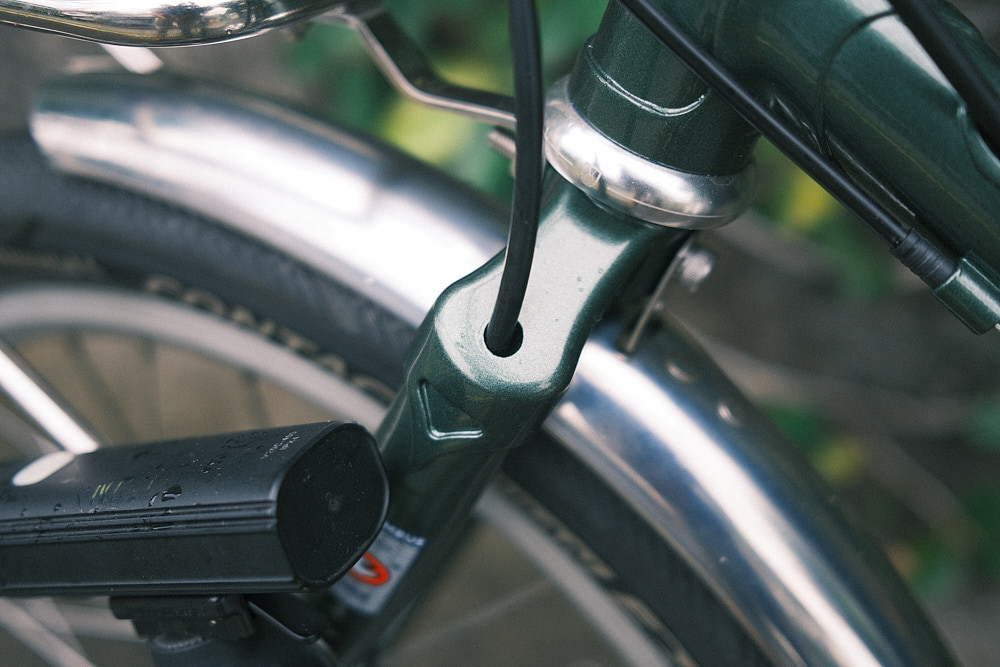
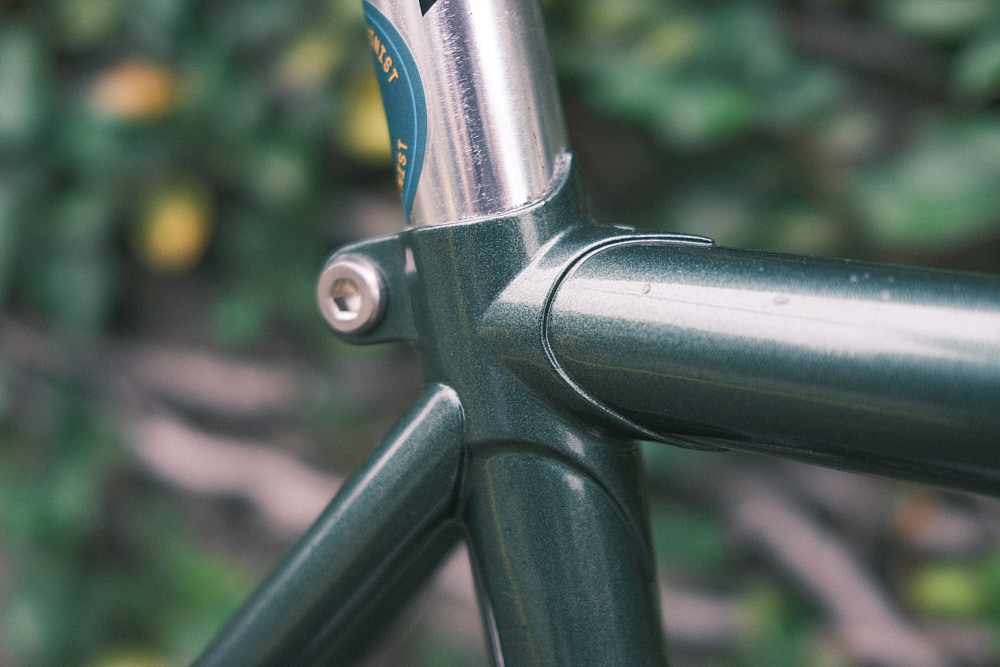
This mini velo was named Knox. Historically, it was used as a surname for those who dwelled near hillocks. In the owner’s case, this is the bike she’ll be riding around the hills of Barangay Kapitolyo.
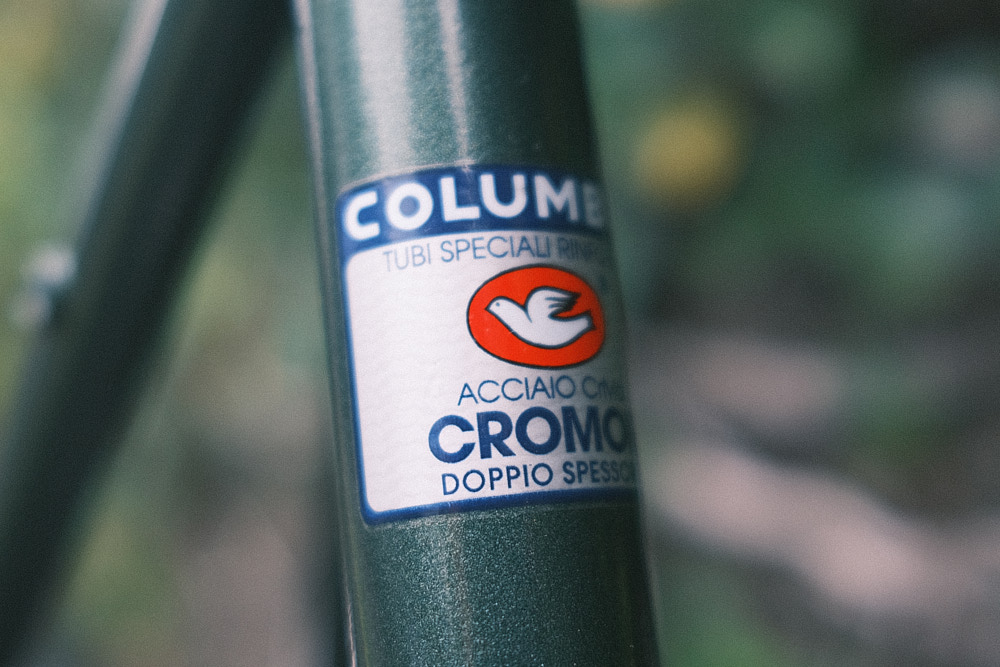
The frame and the fork aren’t made of just any steel, but rather Columbus tubing—supposedly to make the bike lighter. The idea behind the build was to create a neo-retro bike that combined classic looks with modern conveniences.
When deciding on parts, they generally had to be functional, affordable, and aesthetically pleasing, which explains the silver accents.
Many of the parts are secondhand, coming from the owner’s parts bin, Facebook Marketplace, or my former bikes. If something used wasn’t available, then we’d check Shopee to keep the costs down, before resorting to our local bike shop, Tambay Cycling Hub.
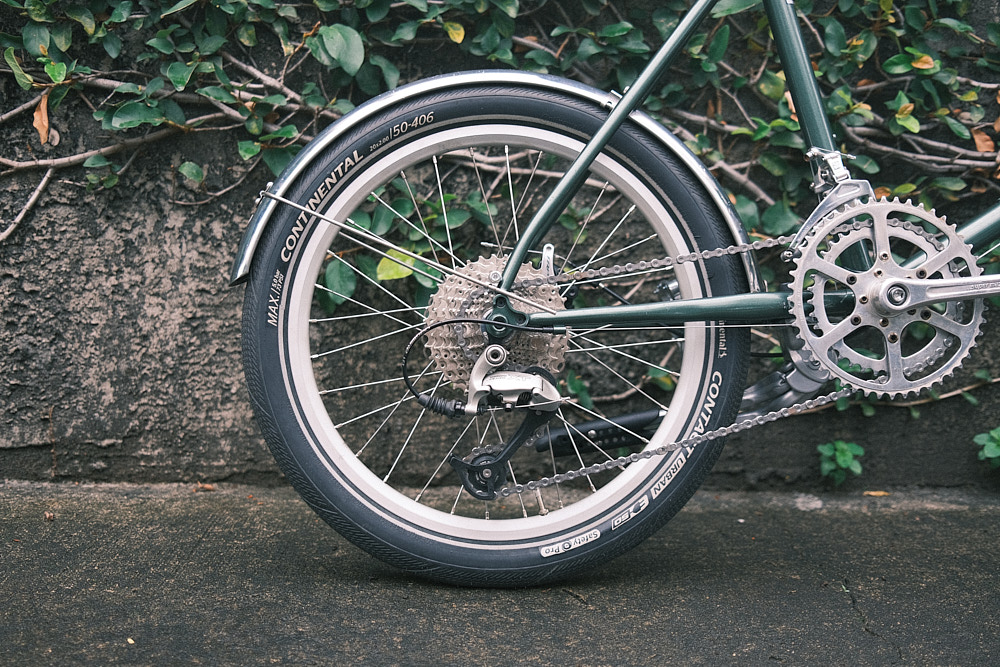
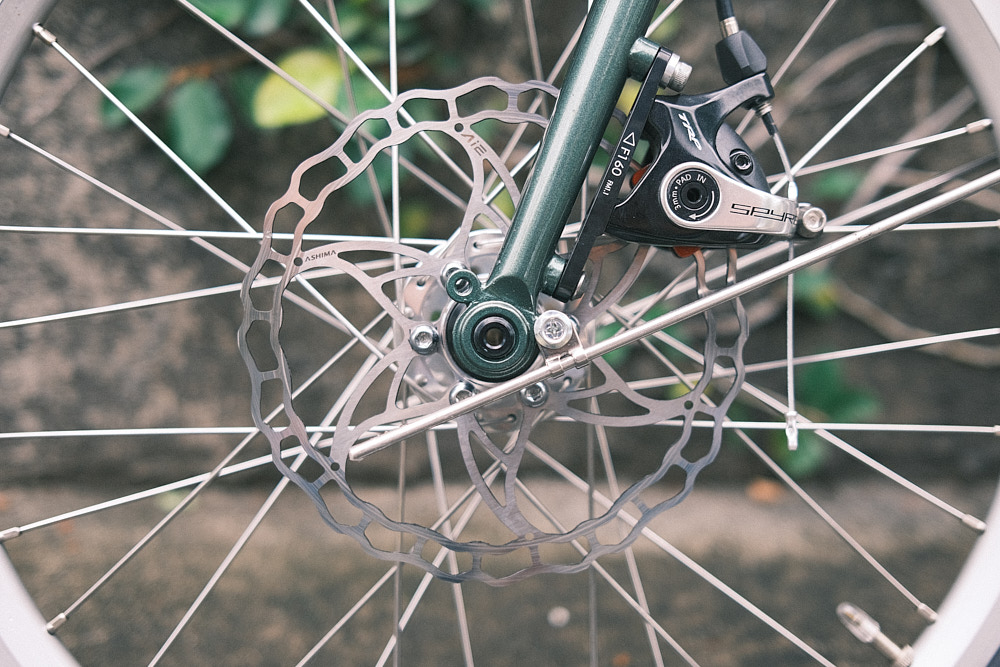
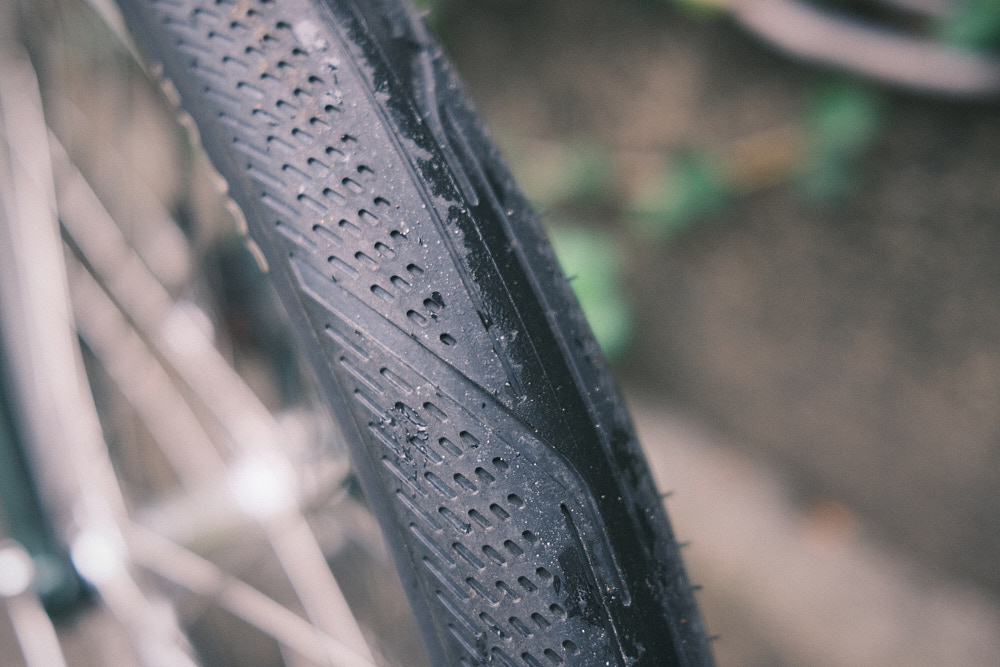
We decided to go with 20-inch wheels, specifically the 406mm standard, so that finding parts wouldn’t be a hassle. The Litepro Kfun rims and the Continental Contact Urban tires were ordered from Shopee, while the spokes and the Traction hubs were procured by Bikewrench Ph, which also assembled the wheelset.
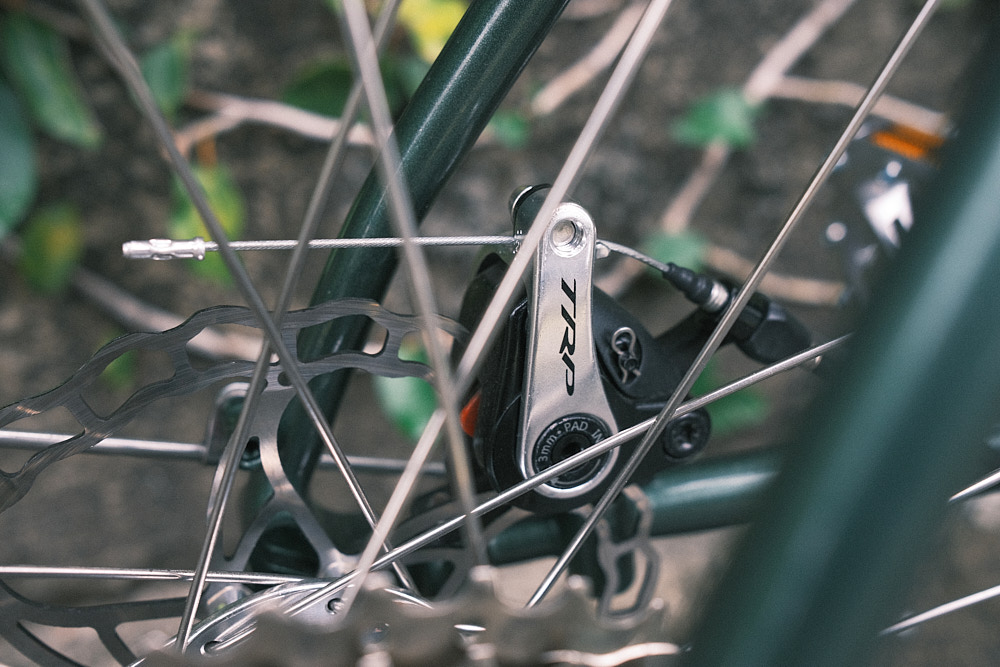
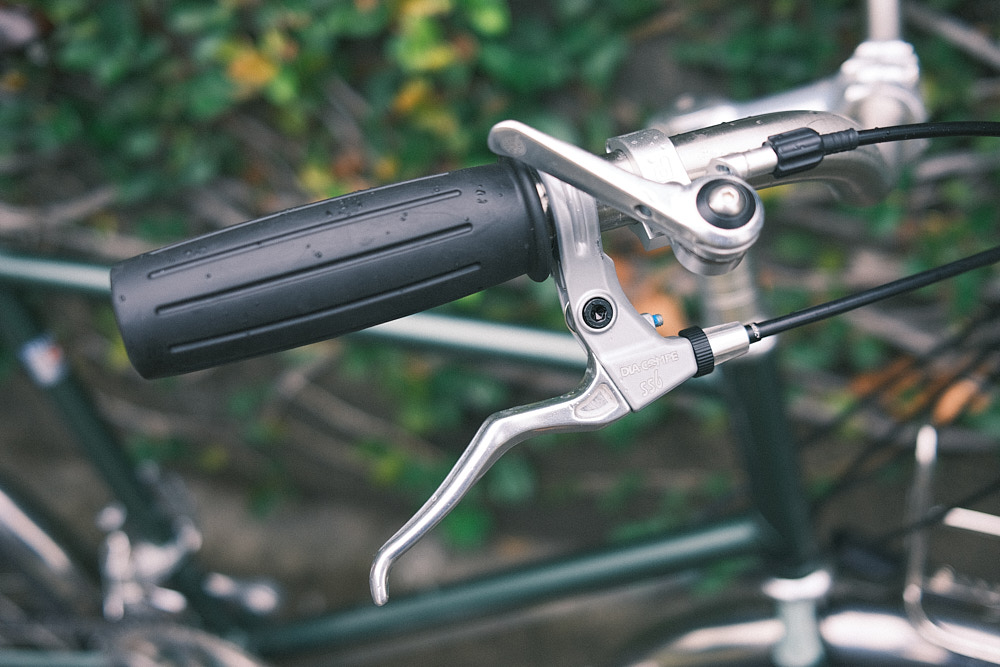
Unlike most mini velos, Knox uses mechanical disc brakes for reliable stopping power, rain or shine. The calipers are a pair of TRP Spyres, and these are actuated by Dia Compe SS6 levers. The TRP Spyres are lackluster with drop bars, but they get the job done on flat bars since there’s more leverage.
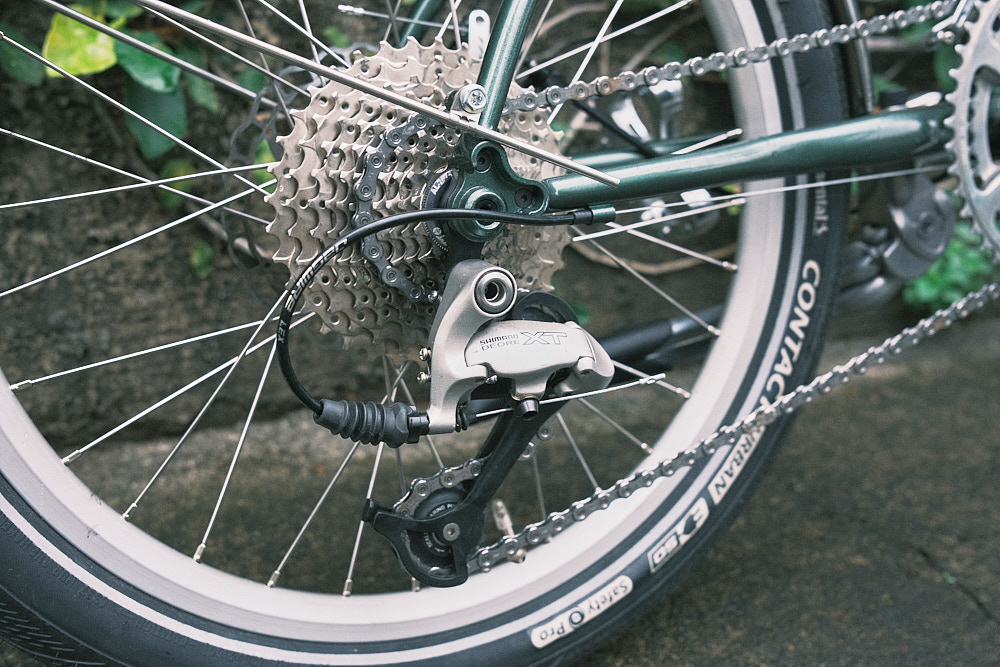
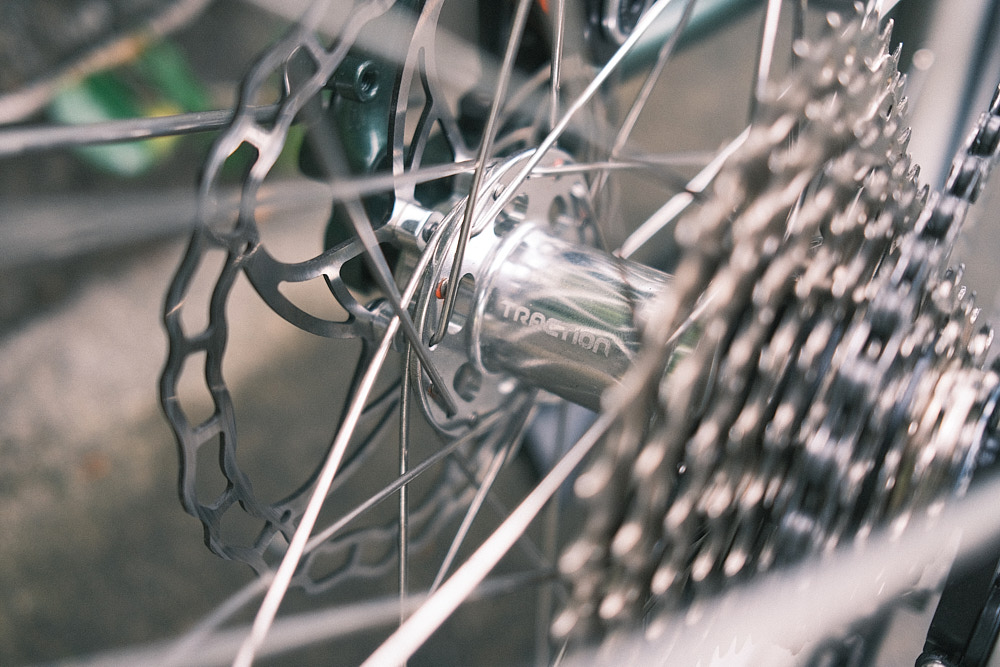
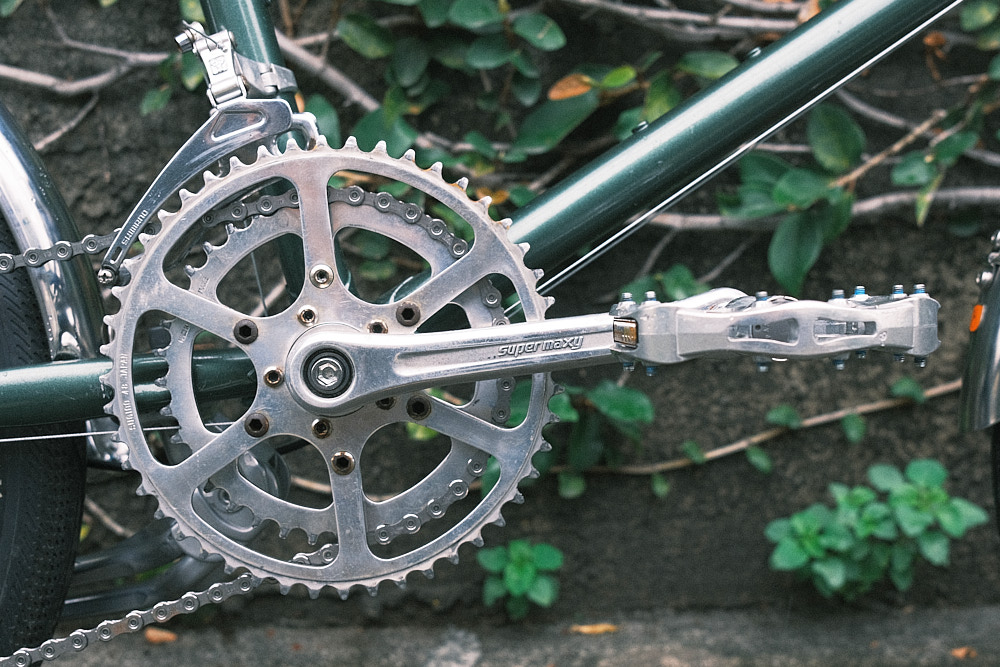
The drivetrain is a mix of mostly secondhand parts. Since the wheels are small, the ZTTO 11-speed, 11-36T cassette sufficed, along with the vintage Sugino Supermaxy crank.
The idea was to use the 48T big ring for general riding, and the 37T small ring for climbing. But if you won’t be sprinting fast, the small ring is more than enough for the hilly neighborhood.
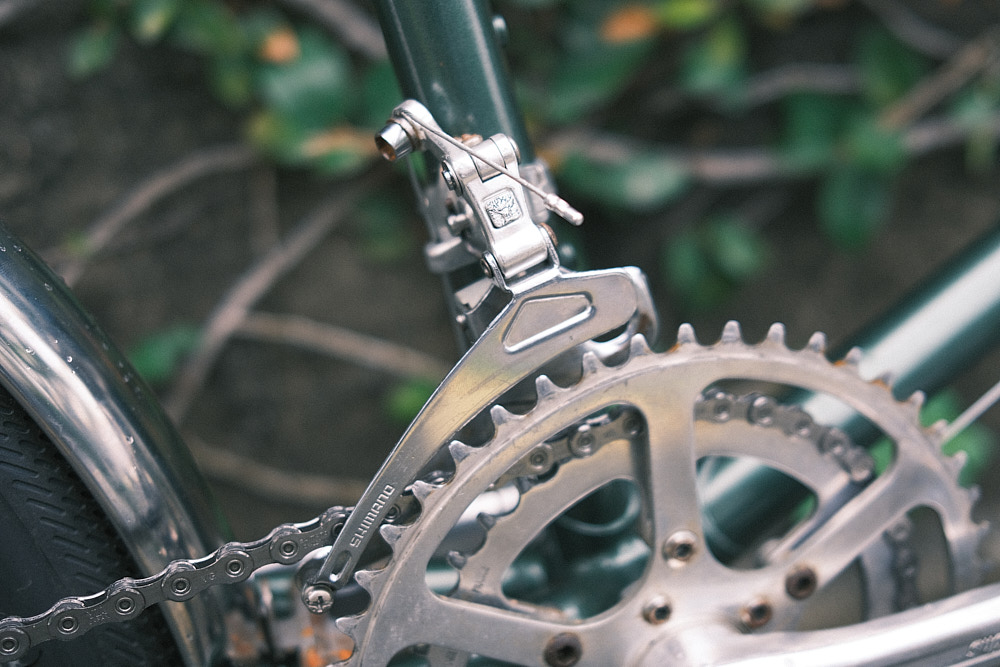
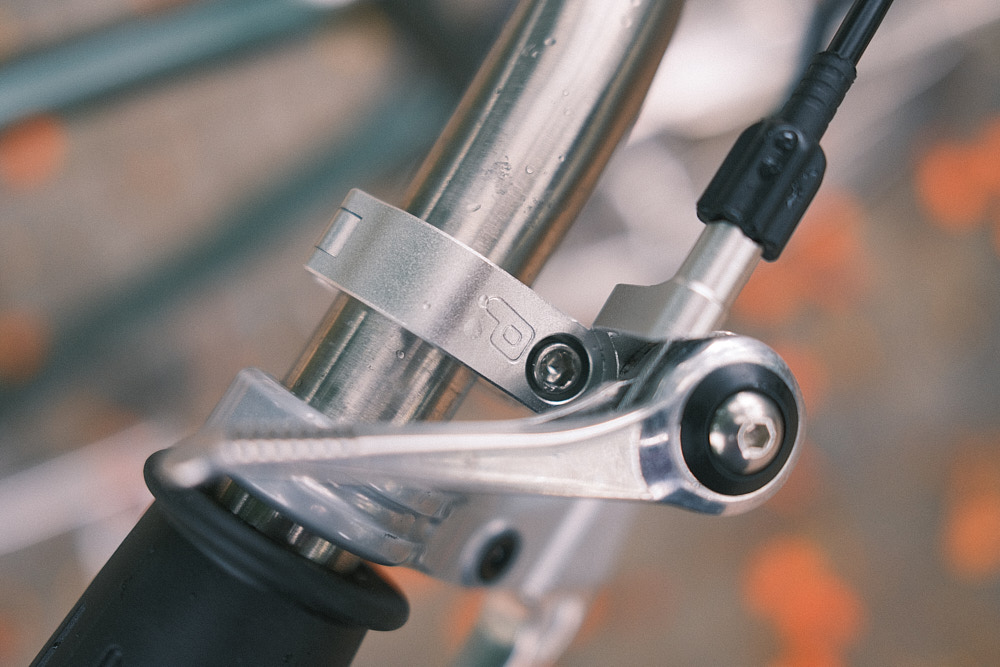
Shifting is done via an old Shimano Deore XT rear derailleur and an even older Shimano “Deerhead” (the very first iteration of the Deore XT) front derailleur. These are controlled by a pair of Rivendell Silver Shifters, mounted on a replica of Paul adapters for flat bars (sourced from Shopee).
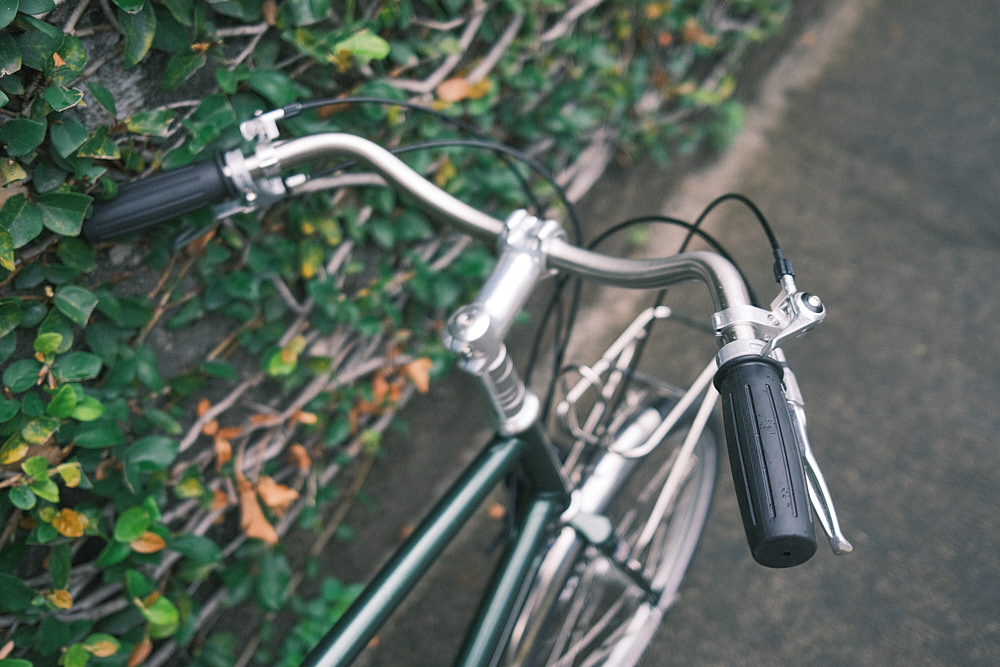
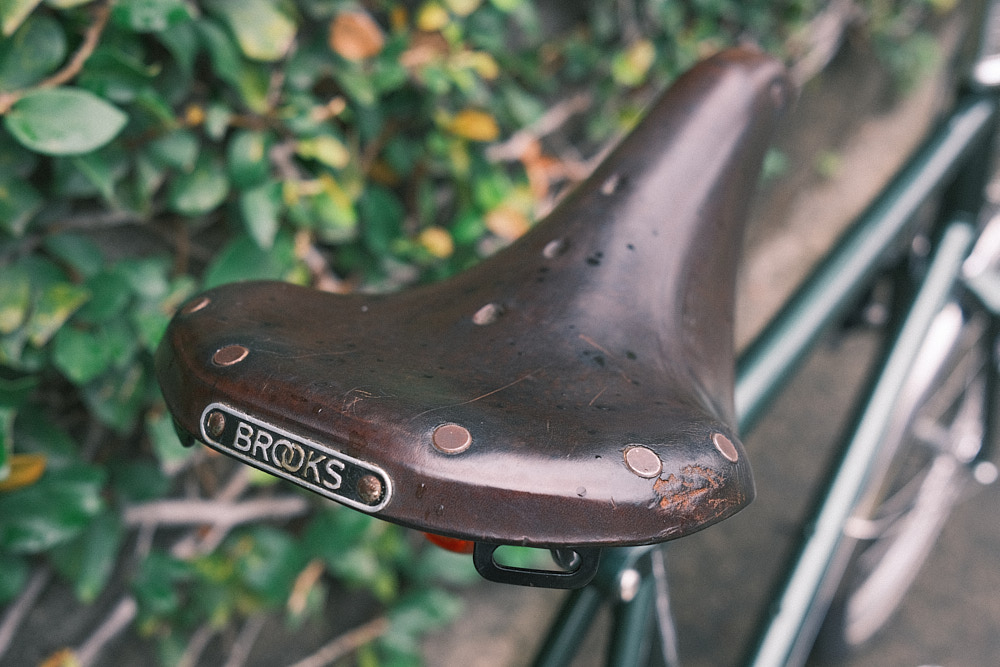
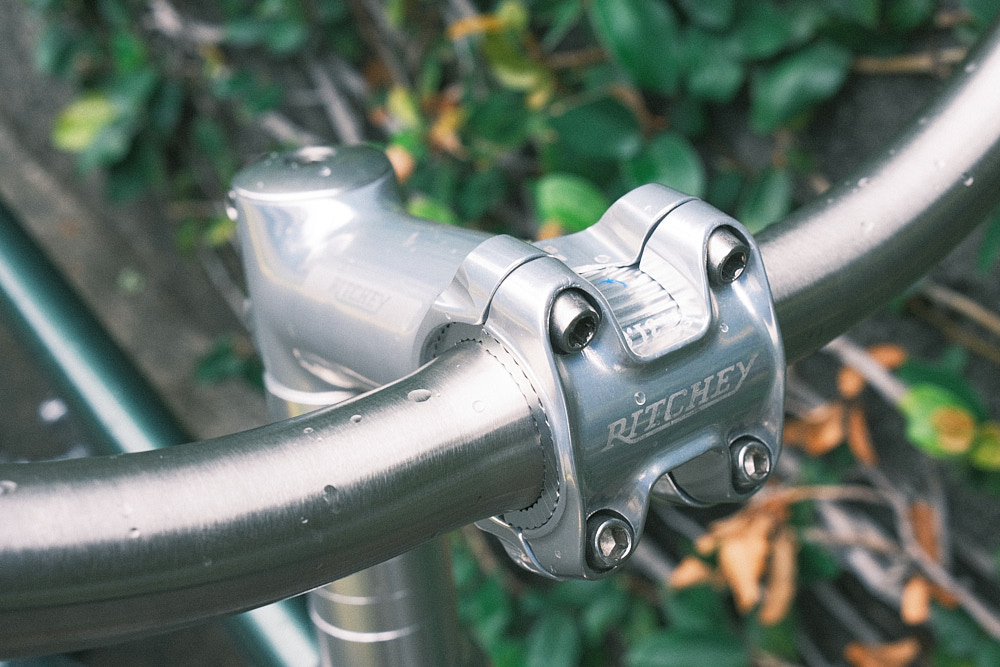
Depending on your budget and preferences, the cockpit can easily be one of the most expensive parts of a bicycle. However, you wouldn’t want to skimp on it because the touch points dictate your comfort while riding.
Knox was designed with flat bars in mind for an upright posture. Originally, it had a riser bar, but it was eventually changed to a Traction swept-back handlebar for even more comfort. The handlebar is attached to the steerer via a Ritchey Classic stem.
The Tarugata grips were an unintentional budol (because there was an issue with the original grips), but they ended up being better than Traction or Oury. Not only were they cheap (coming from a latagan seller), but the grips provided a good grasp on the handlebars.
The saddle is a Brooks B17, attached to a 27.2mm Uno seat post. Since the rider is 5’2”, the seat post had to be cut to lower the saddle properly. For the pedals, we went with MKS Pretzels because they looked classy and provided good grip.
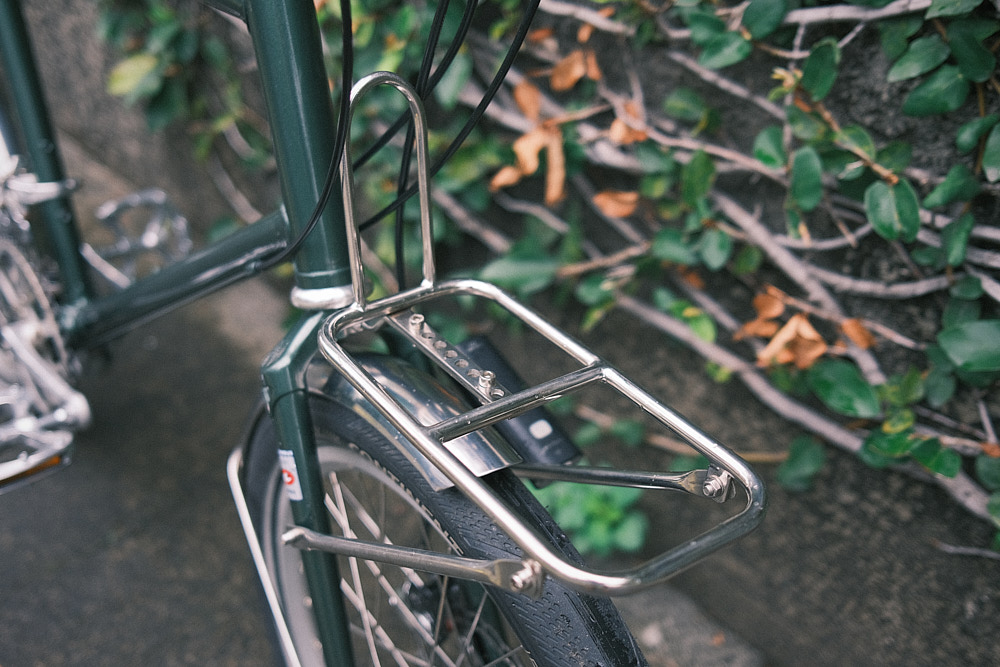
The other accessories were also important because they added to the functionality of the bike.
The fenders (a replica of Velo Orange ones, also from Shopee) help protect against splashes, and these will only become more useful as the rainy season pours in. Meanwhile, the kickstand lets you rest the bike upright when stationary, and the front rack from Bikedelic can be used for hauling cargo.
Because the wheels are small, there is plenty of clearance at the front and the rear to attach bags, crates, or baskets. However, we wanted to keep the loadout simple and not overcomplicate things.
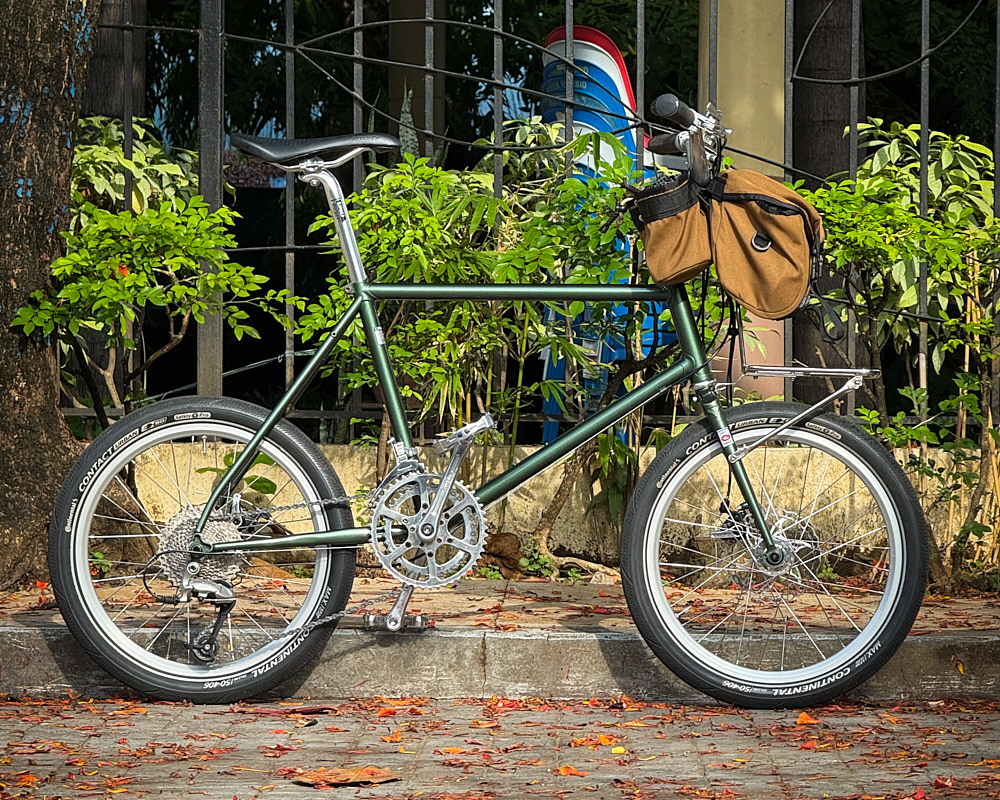
Thankfully, the mini velo rides as well as it looks. Knox is pretty zippy with its grippy tires and small wheels. Despite the latter, the steering doesn’t feel twitchy the same way as a Brompton. It’s because of this that I suggested putting swept-back handlebars.
Also, the wheelbase is shorter than my Java Neo 3. I didn’t think much of it until I realized how easy it was to bring the bike indoors. Perhaps that’s why mini velos are popular commuter bikes in Japan. It also helps that Knox is light, weighing less than 12kg when unloaded.
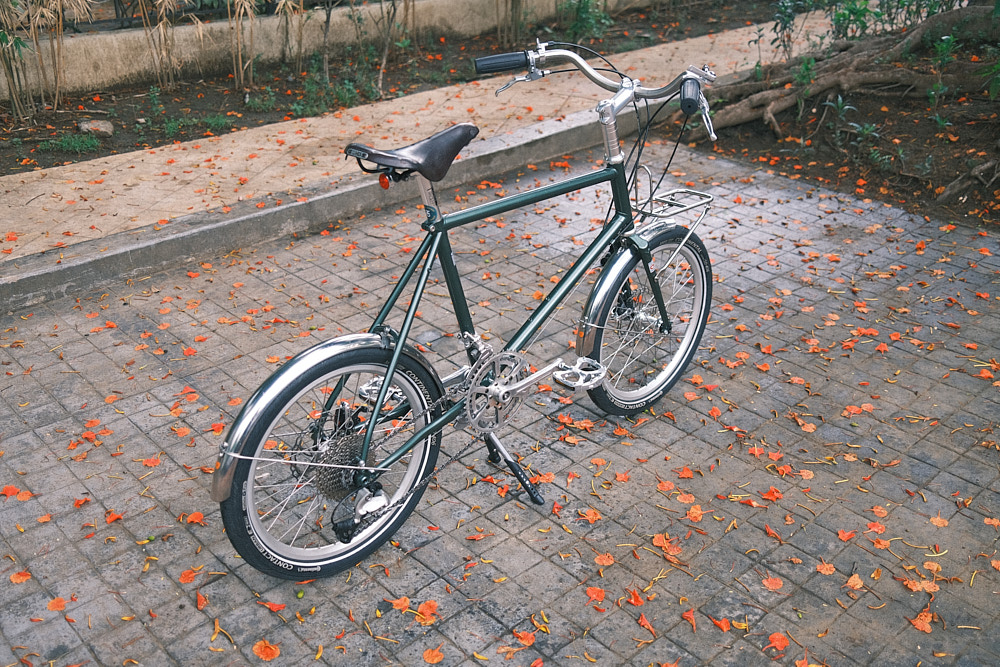
I’m much taller than the owner, so I can fit on Knox just by raising the saddle. This let me test it during my Sunday commute. I was delightfully surprised by how the bike handled. It accelerates quickly, but since the tires are two inches thick, they cushion well against bumps and potholes.
Shift into high gear, and I could reach speeds of 25km/h to 30km/h on flats. The difference, though—compared to a bike with bigger wheels—is that I have to spin the crank like a hamster wheel to attain such velocity. However, that isn’t a problem, since Knox was meant to be an errand bike, not a road bike for spirited rides.
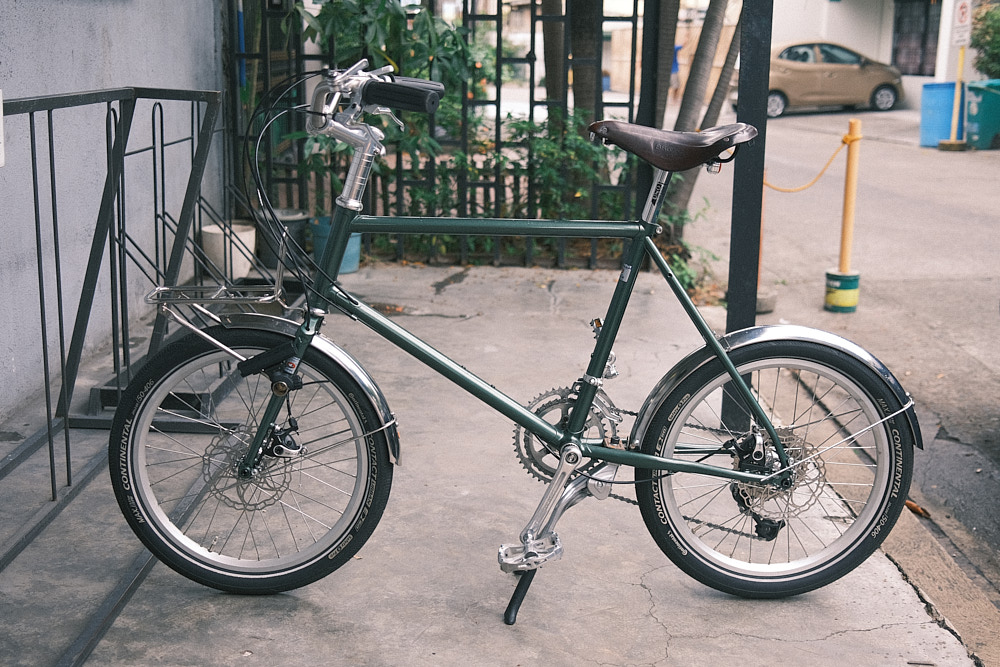
At a price of P44,250 for the frameset, Knox isn’t an affordable bike. Despite that, Mang Ave’s creation is still worth the price tag because it offers great value for money compared to mass-market offerings.
The Velo Orange Neutrino costs $875 (or roughly P54,000), while the Soma Rufus goes for $750 (or P46,000). The Blacksnow Granite is more affordable at $649 (or P40,000). Take note that none of these are lugged frames with Columbus tubing.
Even if the budget were not a constraint, not one of these models offers the same character and prestige as a one-of-one piece of Filipino craftsmanship, custom-tailored to the owner’s preferences and needs.
Meanwhile, Mang Buboy’s paint job doesn’t add much to the total bill because it costs P2,800 (the starting price for a single color), with an additional P500 for delivery.
If ever you want to avail yourself of their services, you can contact Mang Ave and Mang Buboy through their respective Facebook profiles.
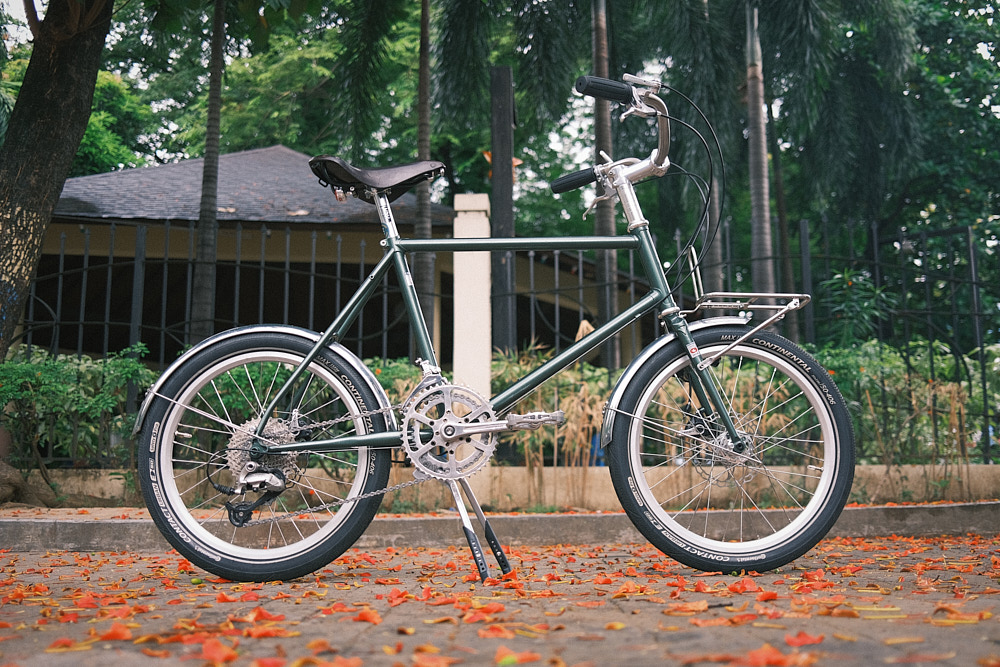
Mini velos show that good things come in small packages. They’re agile and compact, making them good city bikes with a distinct riding experience.
The experience with Knox was satisfying because it showed what happens when you get creative and resourceful in the process. It’s not about building the cheapest or gaudiest bicycle, but curating the right sources and parts to create something practical, beautiful, and unique.


Comments