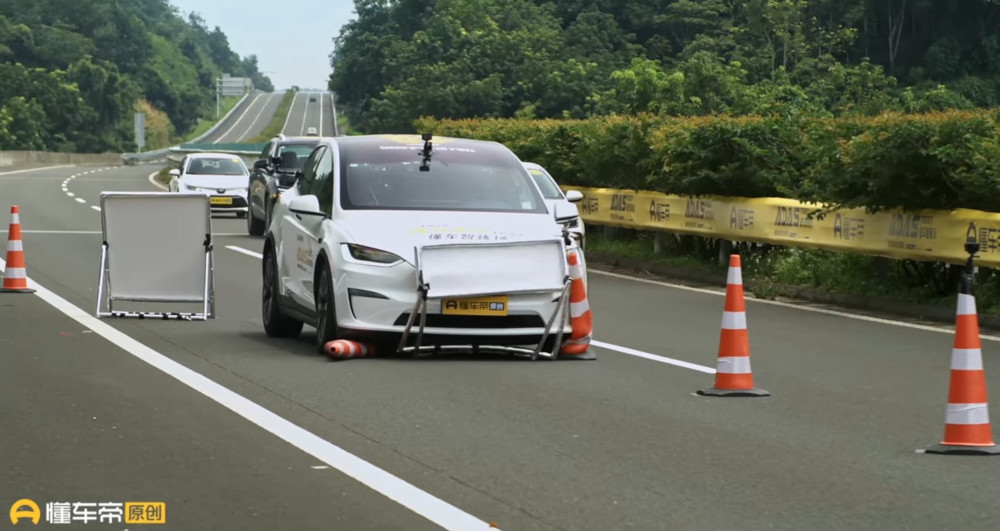

Advanced Driver Assistance Systems, ADAS for short, are getting more common and popular by the day. Most modern cars now come with tech helpers that are supposed to keep us safer by braking for us or avoiding obstacles better than a human could do it. But how well do they really work? That’s a question the ladies and the gentlemen at Chinese car testing organization DCar Studio asked themselves, and they went all out to find the answer.
Instead of just testing one or two individual vehicles, they created a mammoth test that included one closed-off section of a real highway, 36 cars from different manufacturers, and no fewer than 216 high-speed crash simulations at around 120km/h. The goal? See how far modern ADAS systems can go when things go wrong. You can watch the whole 90 minute video about it here.
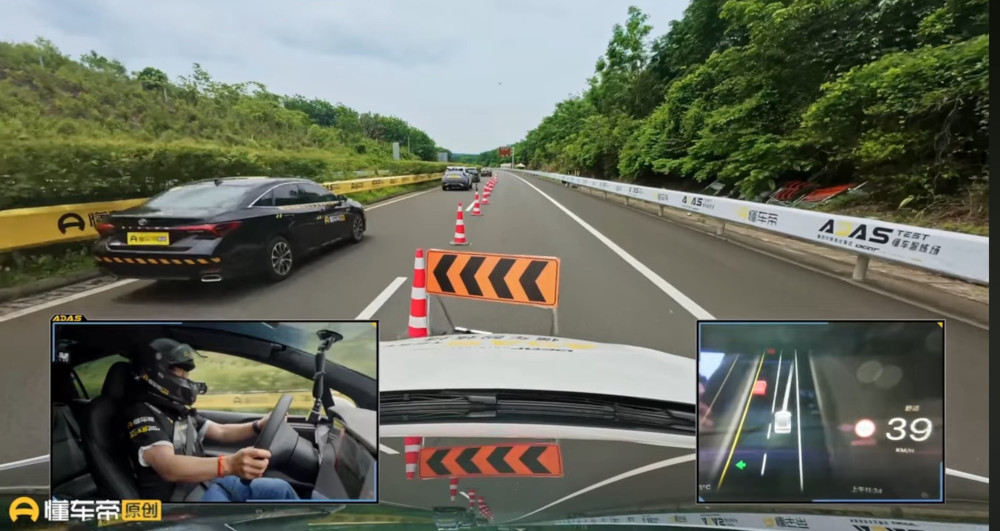
The scenarios were straight out of your worst driving nightmares: parked semi-trailers in dark construction zones, sudden lane closures, merging cars, and even a simulated wild boar crossing the road. The idea was to evaluate whether today’s fancy driver-assist systems could avoid stationary or surprise obstacles. For context, many of these situations would challenge even alert human drivers, so this wasn’t a casual autopilot check. It was a thorough test of software and hardware.
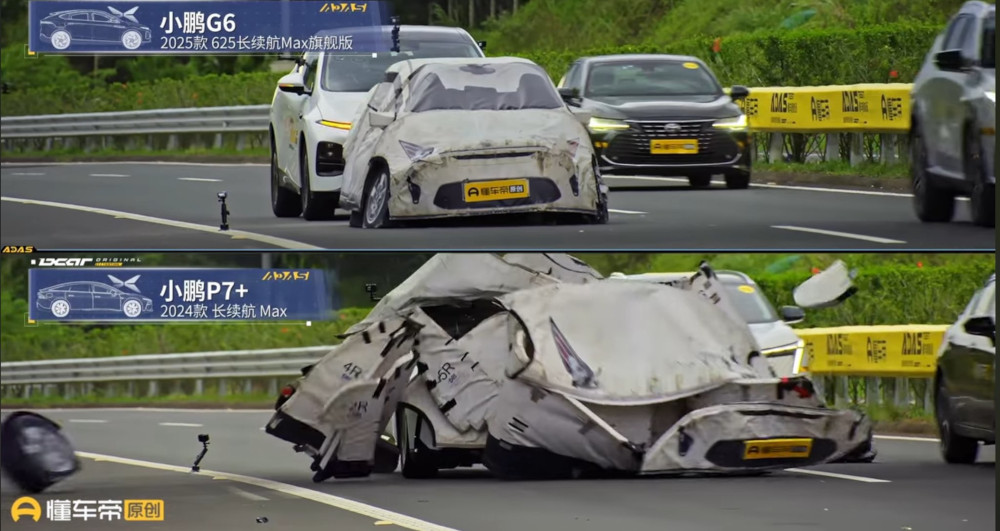
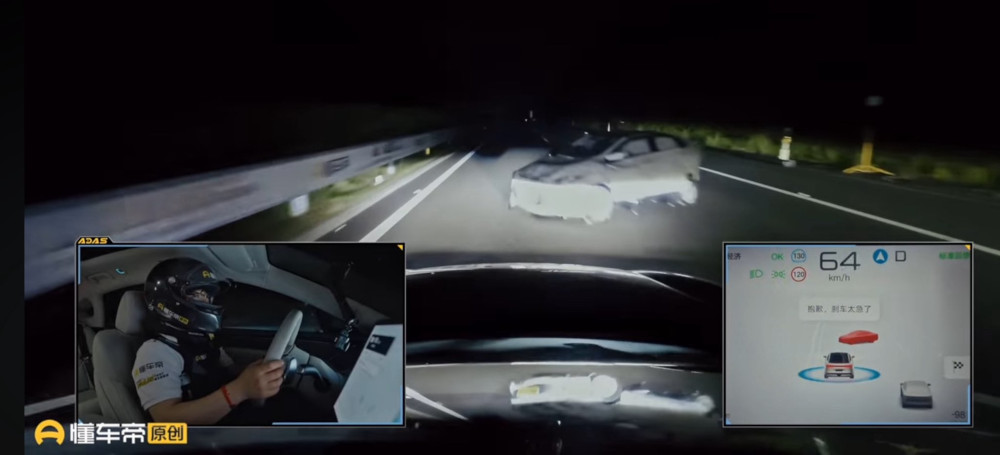
One key takeaway seems to be that it doesn’t matter so much how many cameras or radars a car has, but what it does with them. Some cars had top-shelf sensor arrays, but failed to react entirely. A few didn’t even try to brake, preferring instead to “aim” for tiny gaps, a tactic that usually didn’t work out well. In one case, a car crashed and politely told the driver: “Navigation has ended.” Interestingly, cars from the same manufacturer often behaved differently in identical tests, suggesting software tuning plays a massive role.
Out of all the vehicles tested, only the Tesla Model 3 and Model X came close to a full pass. Both cleared five out of six challenges. Notably, the Model 3 failed only the wild boar test, while the Model X managed to dodge the boar but failed the lane-closure challenge. The other cars presented a mixed bag filled with plenty of disappointment.
Below is a breakdown of how many tests each vehicle passed. As the exercise focused on vehicles available in China, not all models might be fully familiar, but it’s still interesting to see how wildly different cars handled the scenarios.
Top Performers
• Tesla Model 3 (RWD Refreshed) – 5/6
• Tesla Model X (2023 LR Refreshed) – 5/6
Mid-Level Performers (3/6)
• XPeng G6
• Wenjie M9
• Zhijie R7
• BYD Z9GT EV
Average (2/6 or 2/5)
• Aion RT – 2/6
• Platinum 3X – 2/6
• Avita 12 – 2/6
• Wenjie M7 – 2/5
• Avita 07 – 2/5
Weak (1 pass)
• Ideal L6 – 1/6
• Xiaomi SU7 – 1/5
• Wenjie M8 – 1/5
• QinLDM – 1/5
• iCAR V23 – 1/5
• Xiaomi SU7 Ultra – 1/4
• BYD Seagull – 1/4
• Nio ES6 – 1/4
Zero Passes (0/4 to 0/6)
• Zeekr 001 YOU Edition – 0/6
• Baojun Enjoy PHEV – 0/6
• Lynk & Co – 0/6
• Han LEV – 0/5
• Zero Running C10 – 0/5
• Passat – 0/5
• GAC Honda P7 – 0/5
• Zeekr 7X – 0/5
• XPeng P7+ – 0/4
• Song Pro DM – 0/4
• Letao L60 – 0/4
• Star Era ET – 0/4
• Firefly – 0/4
Four test entries had missing or partial data, and so while they are listed for reference (likely because they were intended to be tested), they don’t count toward the complete six-test ranking. These were the Shenlan S7, the Lynk & Co 900, the Leapmotor C10, and the Letao L60.
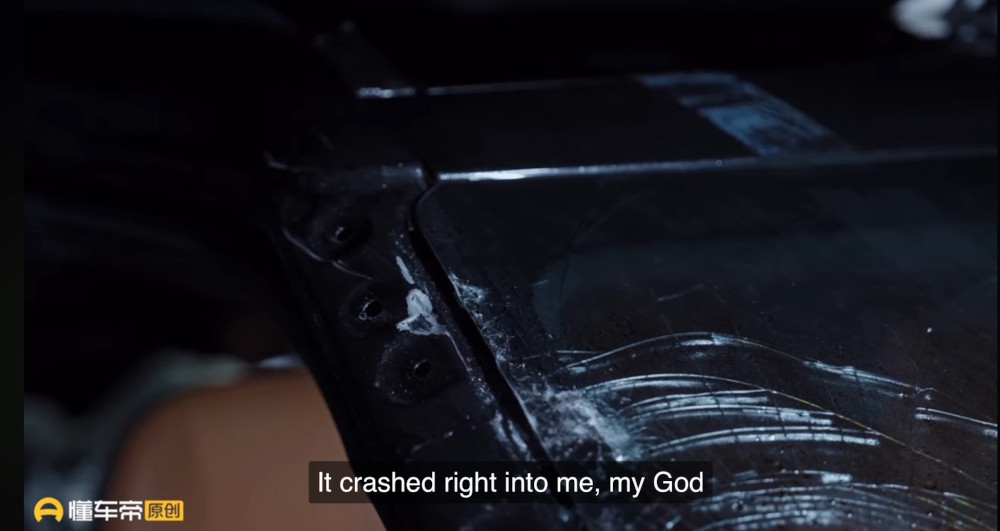
In conclusion, Tesla’s camera-focused approach yielded surprisingly good results, and beat the Chinese competition on home turf, which is nothing short of impressive. China-made cars varied wildly from detecting most obstacles to failing completely. Even very popular and prominent brands like Zeekr and Lynk & Co failed, while Xiaomi also performed poorly.
The German entries didn’t do particularly well, with the China-built SAIC-Volkswagen Passat scoring 0/6; Denza, a joint venture between BYD and Mercedes Benz, scoring 3/6; while the Beijing Benz C260L, a direct Mercedes-Benz product built for China via a Daimler-BAIC joint venture, got a measly 0/4. Maybe the biggest lesson here is not to rely too much on electronic helpers, and to always stay alert yourself. At least in some car brands, that seems to be very advisable.
Comments