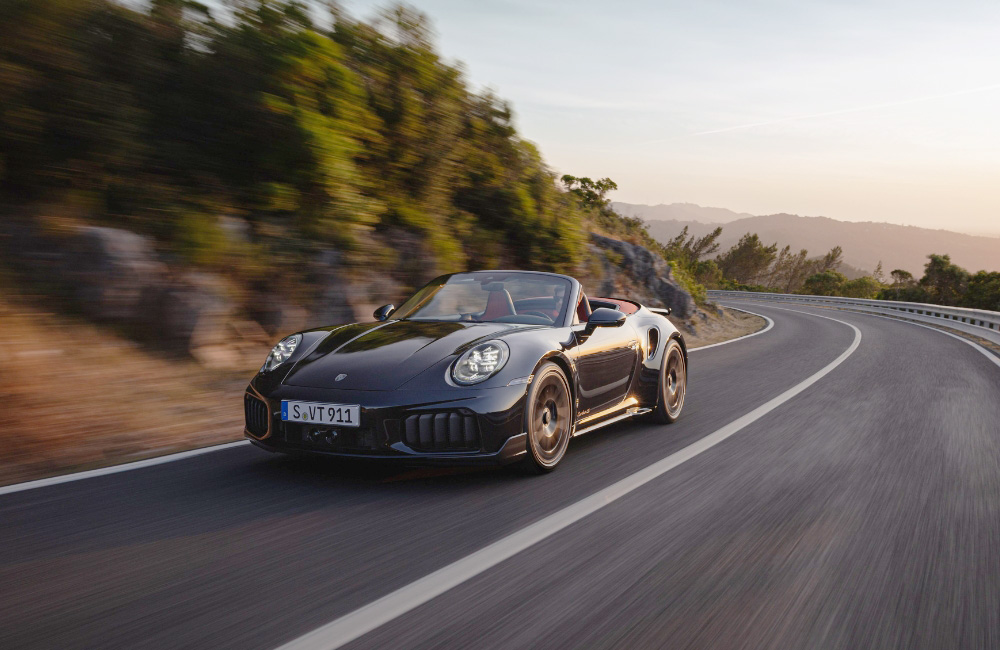

When the 911 Carrera GTS T-Hybrid was unveiled with an output of 534hp, we suppose the next Turbo S would have around 700hp to 710hp.
Not a bad guess. The 992.2 Turbo S delivers 701hp, care of a 3.6-liter T-Hybrid. It’s the second electrified 911, with the GTS laying the architecture for this necessary approach and developed further for the Turbo S—making it the most powerful production 911.
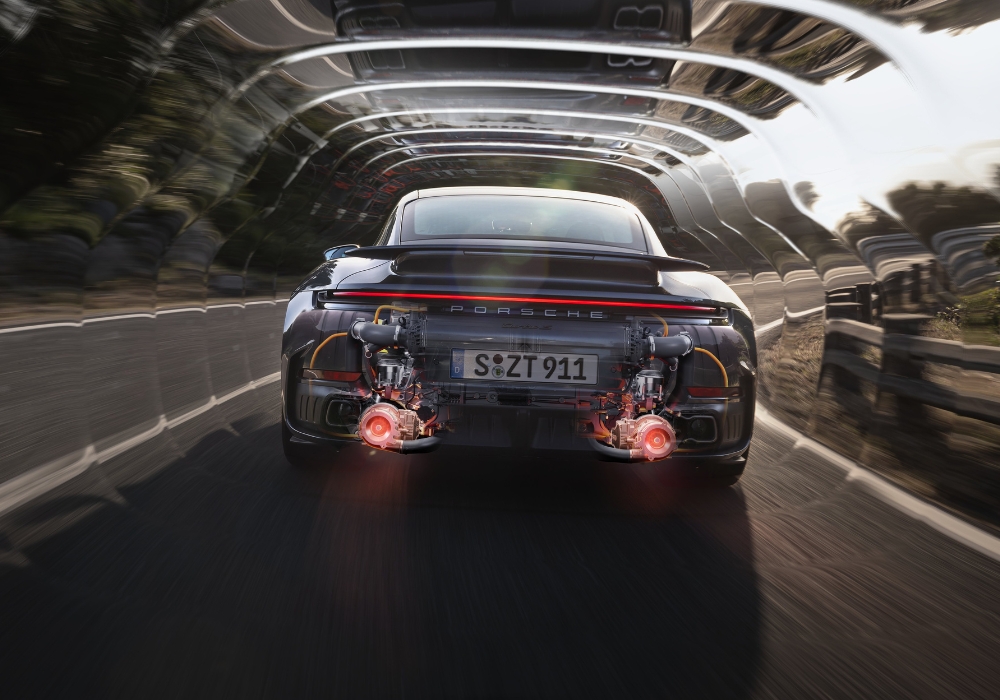
This being the top-of-the-range 911, however, there are two turbos to increase power compared to the GTS’s single turbo. And the eTurbos are lighter and more compact than the lone turbo on the GTS.
Compared to its predecessor, the new Turbo S has 60 more horses. While the previous and refreshed models share the same peak torque of 800Nm, it’s how the torque is available over the rpm range (between 2,300rpm and 6,000rpm, covering an impressively wide range). Hybrid assistance essentially shortens the time between gears, making the car pull better out of corners.
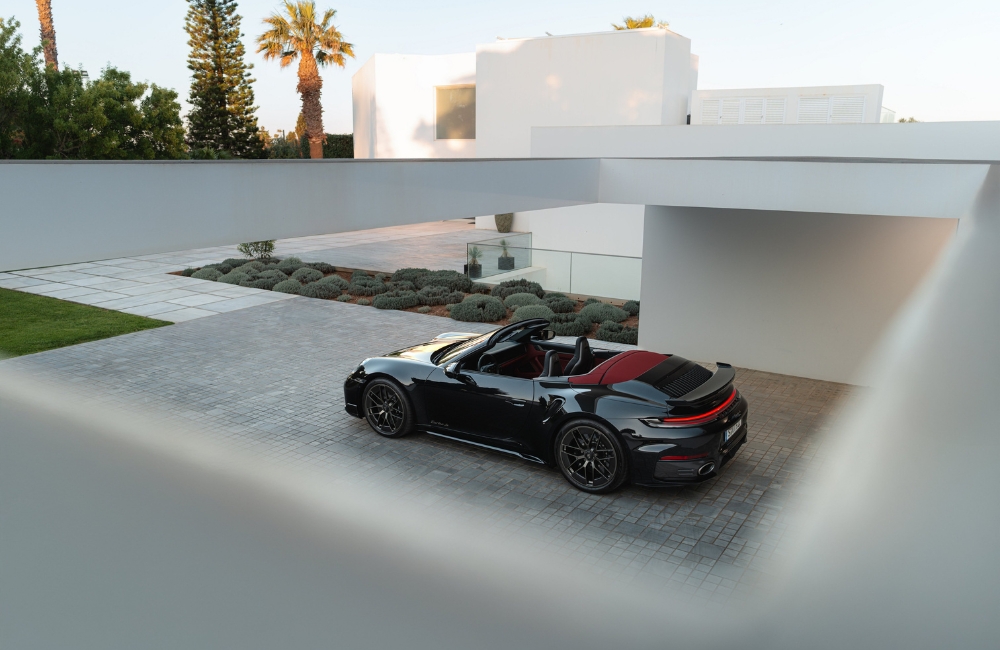
The refreshed Turbo S can hit 0-100km/h in 2.5 seconds (0.2 of a second quicker than the previous model), sprint 0-200-0km/h in 12.6 seconds, and with a top speed of 322km/h. But crucially, it weighs 1,725kg, only 85kg more than the previous one. Broken down, the extra weight is due to the twin eTurbo motors, the 1.9kWh compact high-voltage battery (same spec as that of the GTS), the electric motor in the PDK gearbox, and the supporting electronics and hardware.
All that power and pull, however, are nothing without the car cutting through the air more efficiently. There’s an improvement of 10% less drag compared to the previous model, and a drag coefficient of 0.3, “which is really impressive for such a wide car,” shares Bernd Jachowski of Porsche’s General Design Aerodynamics.
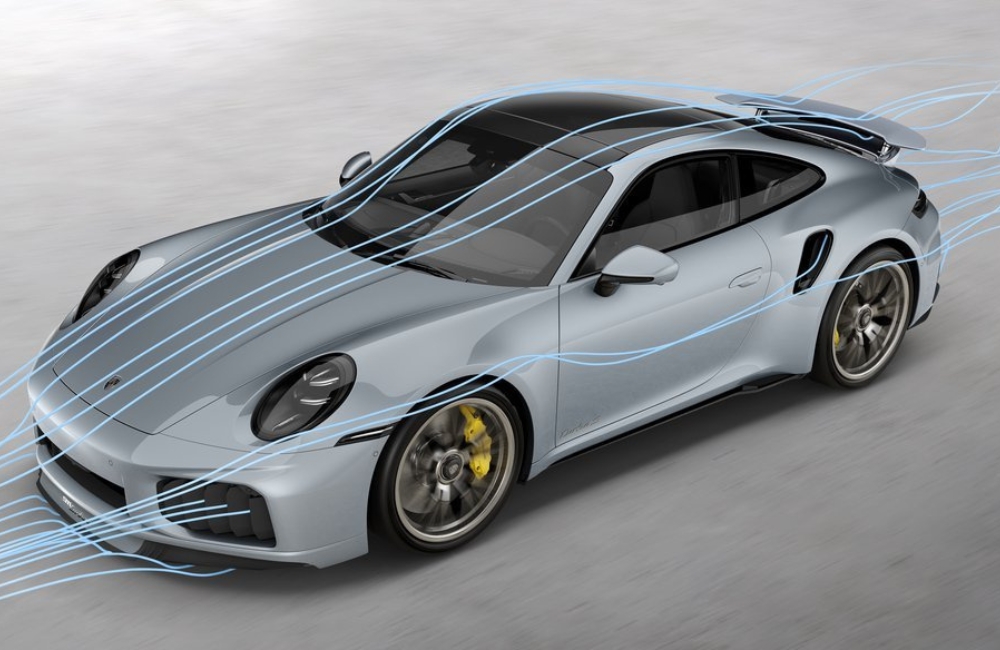
Porsche Active Aerodynamics elements—such as the active cooling flaps, the adjustable front spoiler lip, the adjustable rear wing, and the airbrake function—optimize performance. Additionally, there are new active front diffusers. In wet driving conditions, it will close to protect the front brake discs from the spray, further improving braking. Tweaks have also been done to the underbody flow, such as components that cover the rear axle.
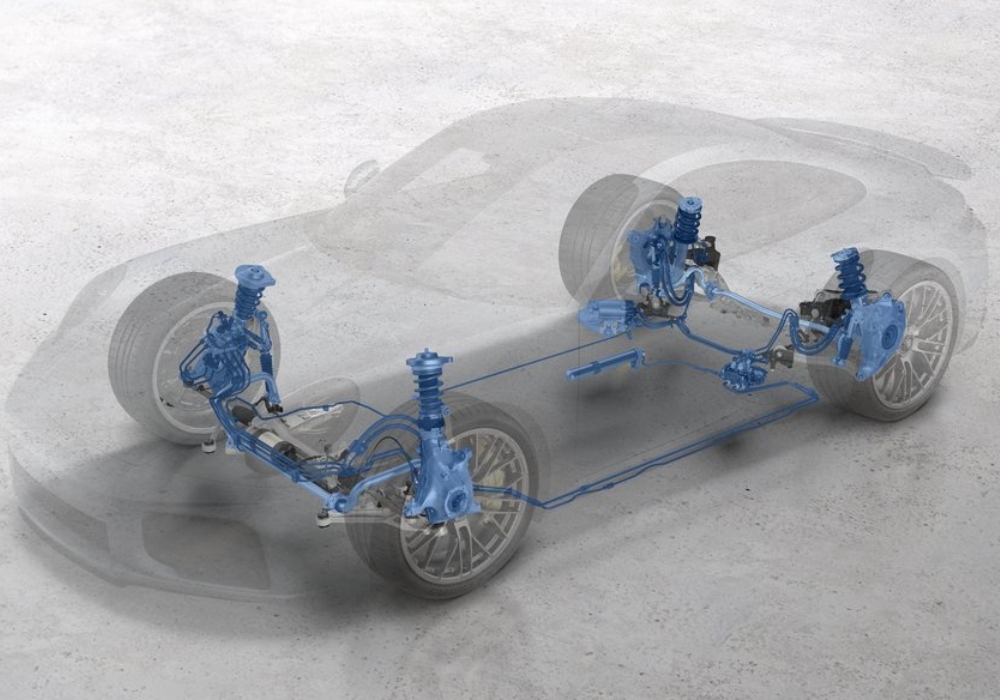
That said, the chassis benefits from the high-voltage system. The updated electrohydraulic Porsche Dynamic Chassis Control (ehPDCC) responds better than its predecessor, enhancing both stability and agility simultaneously.
Porsche has further improved handling through the latest generation of tires. The rear is now fitted with rubber 10mm wider compared to the previous model, measuring 325/30 ZR21, with the same measurement of 255/35 ZR20 in front. Brake disc diameter at the rear has also been increased to 410mm from 390mm, while 420mm is used at the front.
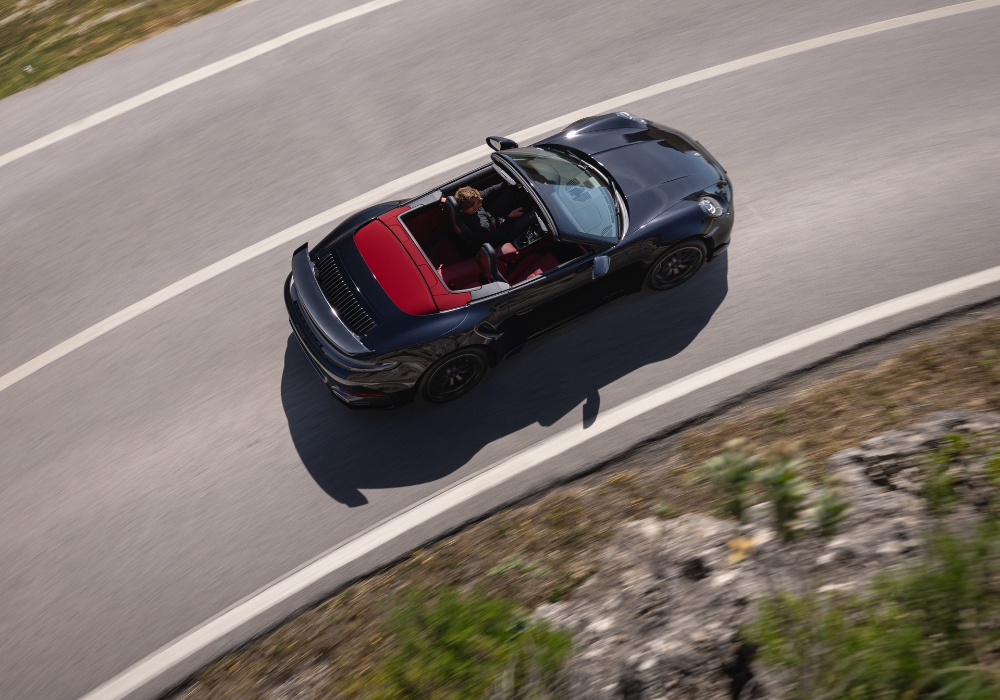
Everything put together results in a time of seven minutes and 3.92 seconds around the Nurburgring Nordschleife—14 seconds faster than the previous model. “You don’t feel the weight gain,” says Porsche brand ambassador Jörg Bergmeister. “On the contrary, the car is much more agile, has more grip, and is significantly faster than its predecessor in all relevant sections of the track.”
Bergmeister was involved in the development and the testing of the new Turbo S, and set the official lap time.
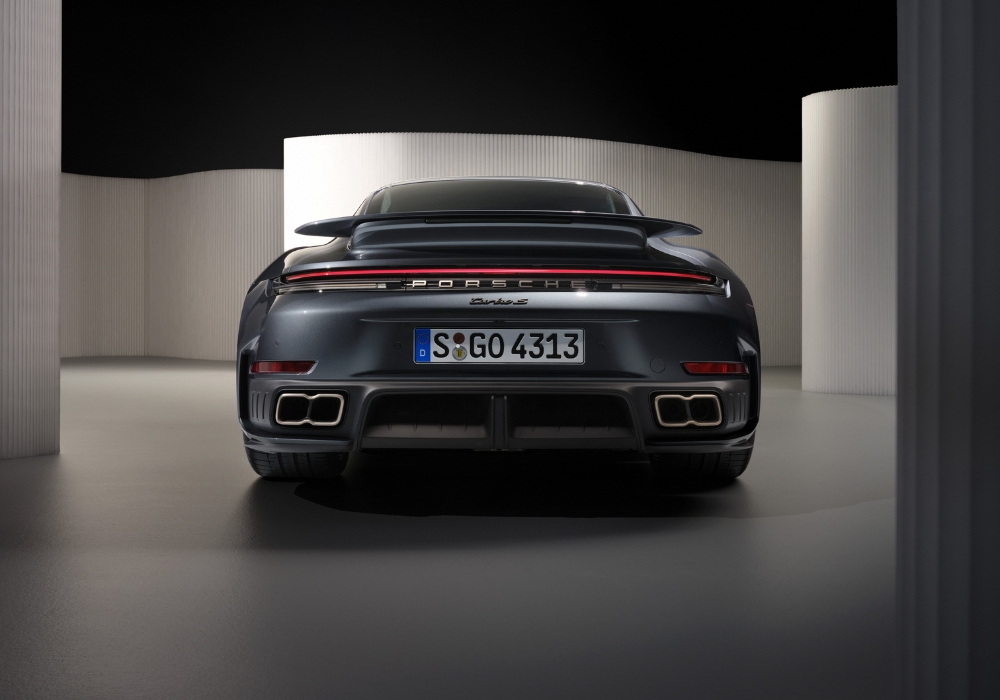
As far as the new look goes, the front end of the new Turbo S is very similar to the GTS, with five vertical active flaps on each side, along with the front spoiler. HD Matrix LED headlights are standard, of course.
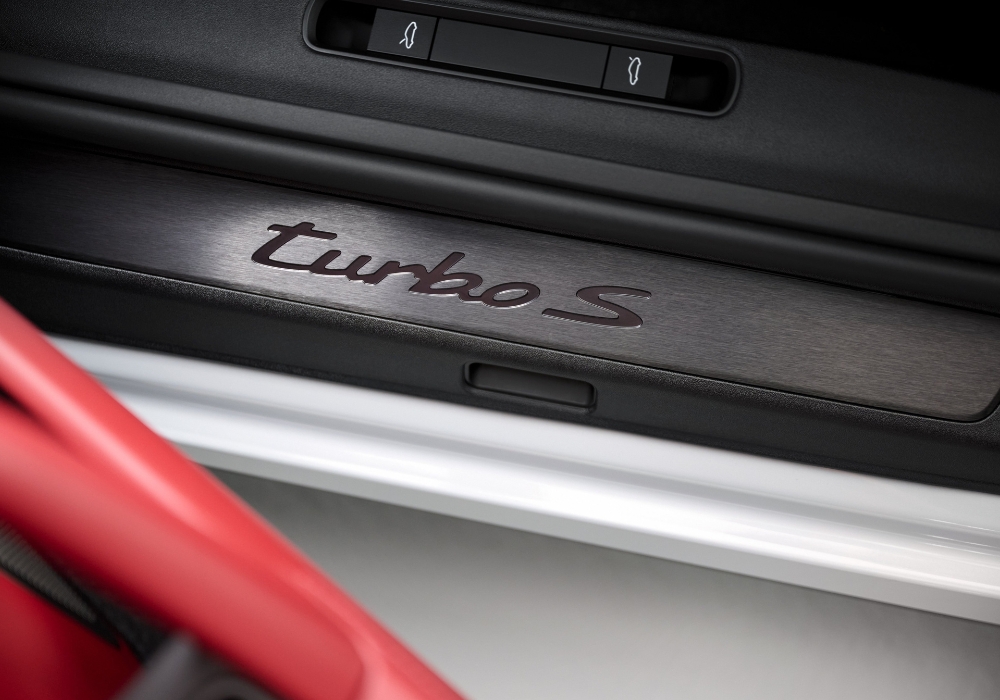
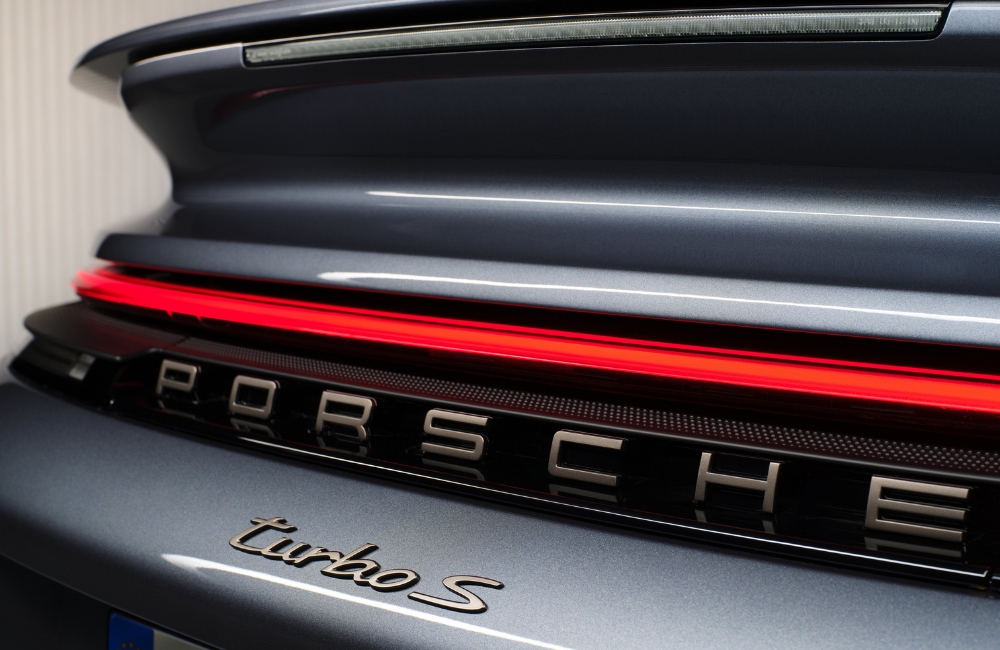
While the front sports functional details, the rear retains how a Turbo looks. A personal favorite detail is the air-vent section before the titanium exhaust tailpipes, with Impact Bumper styling that harks back to the first 911 Turbo, the 930. Even the launch color is reminiscent of Slate Blue Metallic, a shade that is iconic to the G-Model. Reserved exclusively for Turbo variants, contrasting elements like the Porsche crest and the Turbo S lettering are finished in the color Turbonite.
Finishing off the look of the new Turbo S is a range of center-lock wheels, also in Turbonite.
Overall, the new Turbo S looks cleaner.
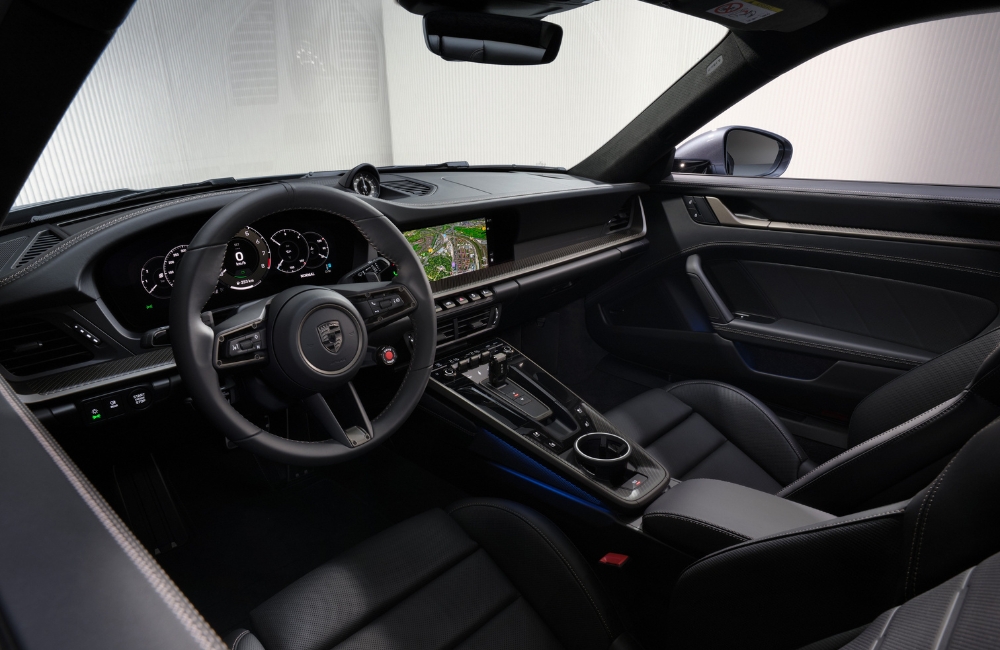
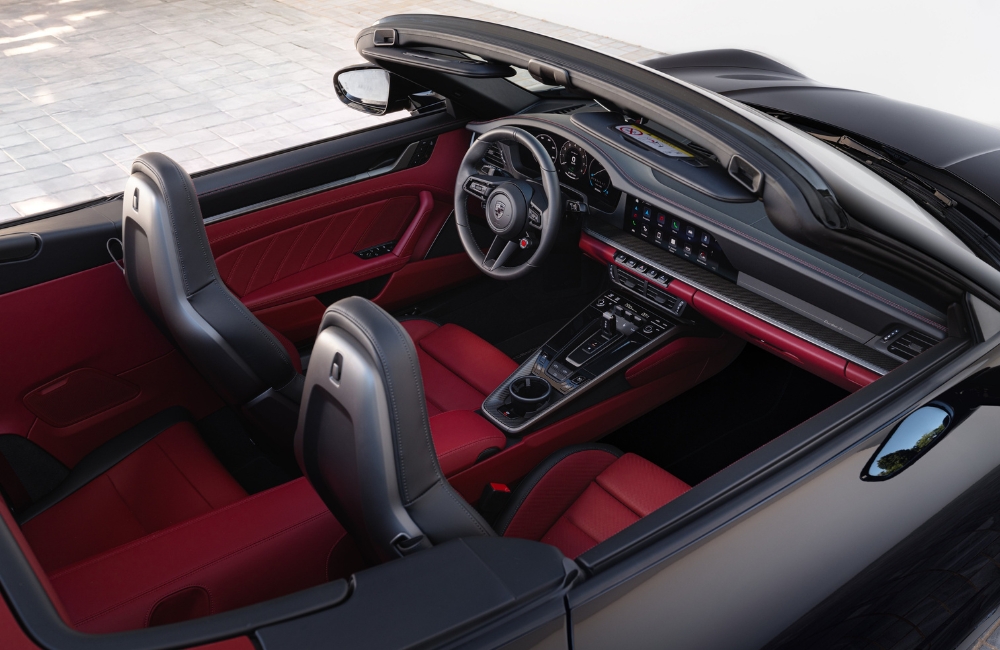
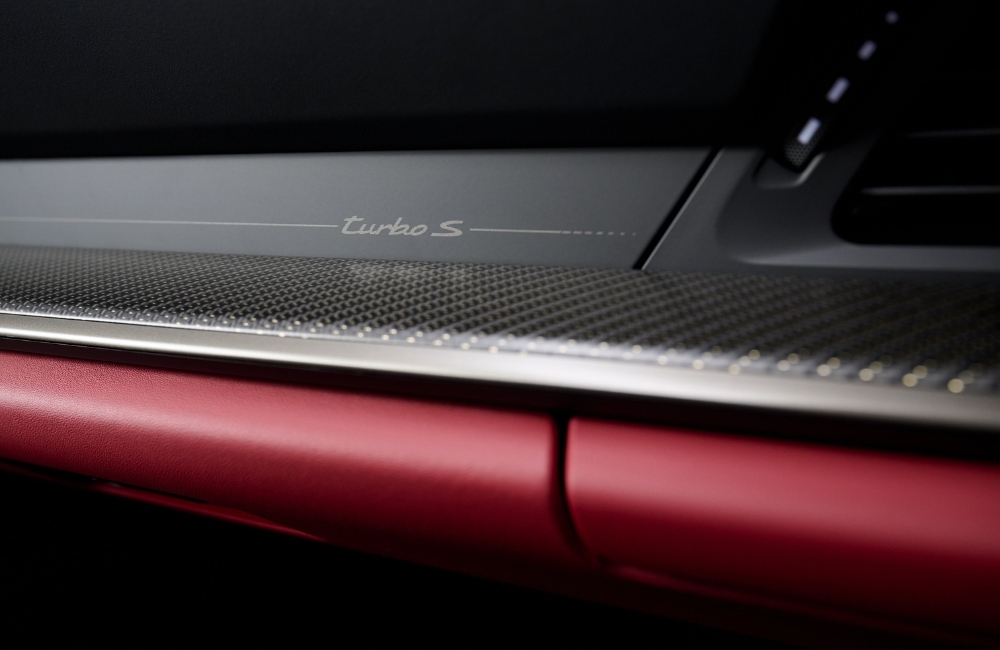
Inside, Turbonite accents are likewise found all over, giving the interior a consistent look with the exterior.
The Turbo S coupe comes as a two-seater, but rear seats can be requested at no extra charge. The folding lightweight sport bucket seats from the GT3 are available as an option for the coupe. The cabriolet, meanwhile, comes as a 2+2.
With higher figures achieved through the twin-turbo T-Hybrid, the new 911 Turbo S appears to have reclaimed its position at the top.

Comments