
Having the right insurance for one’s needs can lessen the worries if an accident occurs, whether it’s for your health, business, house, or car. But before signing a policy, assessing what’s in the market should be the first step.
Given the number of vehicles sold daily in the Philippines, it’s a smart decision to choose an insurance provider that is already well established. There is an abundance of providers, but many are not well established. Reviewing them one by one can also be overwhelming, especially if it’s your first time encountering their terms.
For instance, getting the lowest premium might be tempting at first, but in the long run, it can cause headaches. A few things to look into are the comprehensive insurance coverage, the ease of claims, the nationwide branches, the customer service, the dealership partnerships, the financial rating, the specialization, and the adaptability. Researching its standing in greater depth regarding those factors can give consumers better insight and a more informed conclusion.
Here are the five (5) car insurance providers we recommend, in no particular order:
• STANDARD INSURANCE. The firm was established in 1958. It has more than 60 branches nationwide, along with its dealership partnership network throughout the country. This ensures that representatives are within customers’ reach. The brand can provide ease of LOA issuance for casa repairs and a smooth claims experience.
Standard Insurance specializes in automobiles, offering one of the best comprehensive car insurance packages through its Car Protect product suite. The coverage protects policyholders against Compulsory Third Party Liability (CTPL), own damage, theft, acts of nature, excess third-party liability, and personal accident risks. Claims can also be filed conveniently online, ensuring a fast and efficient experience for clients.
With the rapid rise in electric vehicles, most standard policies often fall short of addressing their specialized requirements. Standard Insurance addresses this market shift through its dedicated EV insurance coverage. Tailored specifically for EV owners, the policy covers unique EV risks, specialized roadside assistance, and protection of charging equipment.
Standard Insurance is a globally awarded Filipino nonlife insurance company. In August 2025, Global Credit Rating upgraded Standard Insurance’s national-scale financial strength rating from A+ (PH) to AA- (PH) with a Stable Outlook. In the same year, the company recorded P3.42 billion in net premiums written and ranked third among nonlife insurers in net income and net worth, according to Insurance Commission data.
• PIONEER INSURANCE. This is one of the largest nonlife insurers in the Philippines, and has been in the market since 1954. Its product portfolio caters to both private vehicles and TNVS fleets. Beyond basic CTPL coverage, its comprehensive plans protect against vehicle damage, theft, acts of nature, third-party liability, and personal accident risks. Pioneer Insurance’s decades of market leadership are reflected in its top-tier rankings among local nonlife insurers, with first place in net premiums written at roughly P6.9 billion and the highest net worth and total assets.
• MALAYAN INSURANCE. It is another big name in the nonlife insurance market. It has been around since 1930. The company offers a wide range of products catering to personal and commercial insurance needs. It offers digital processing of paperwork. It also has partnerships with casa service centers and major car dealerships. Malayan achieved P5.31 billion in net premiums written in 2025, ranking third among nonlife insurers. The Insurance Commission data ranked the company second in net worth.
• PRUDENTIAL GUARANTEE AND ASSURANCE. Its operations started in the 1980s, focusing on large-scale operations. Its portfolio is broad, covering cars, marine, aviation, personal accidents—even catering to travel needs. Its clientele is mainly corporations throughout the country. According to Insurance Commission data, PGA ranks second among Philippine nonlife insurance companies for net premiums written, at P5.38 billion.
• STRONGHOLD INSURANCE. It was established in 1960, providing a diverse risk coverage to its patrons. Policies for private cars, commercial vehicles, and motorcycles are available. The motor plan can protect owners from theft, physical damage, and other factors beyond third-party liability. Stronghold ranked fourth among Philippine nonlife insurers in 2025 based on net premiums written, at approximately P4.99 billion.

It’s better to do your own research before getting car insurance—both the plan and the company you choose to trust. You also have to assess what you need. For instance, consider what you drive, your driving habits, location, budget, and other risks to factor in.
But if you return to basics, what should comprehensive car insurance cover?
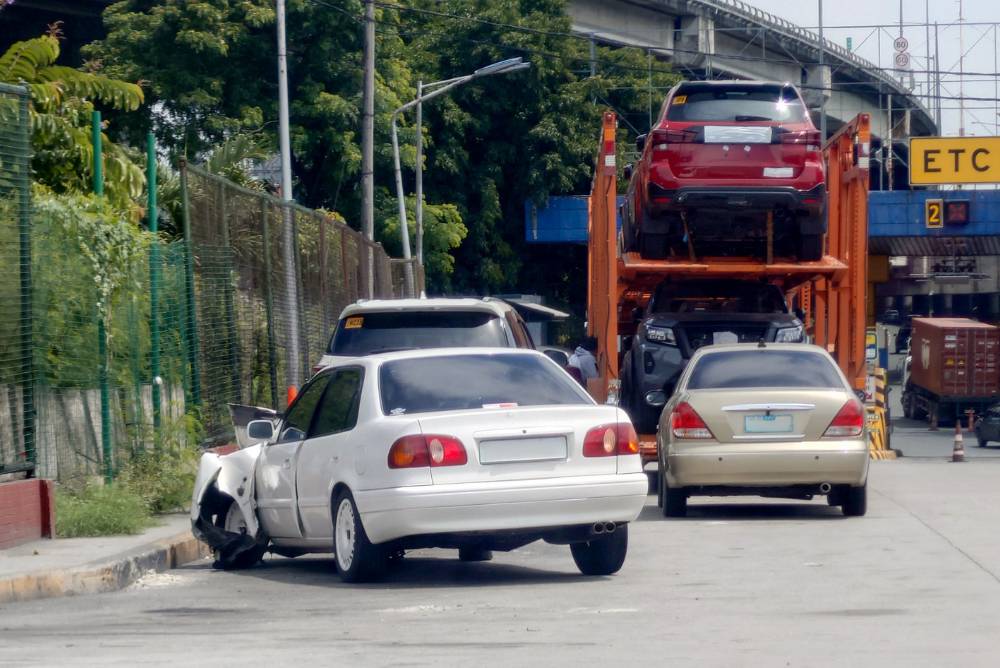
No one wants to damage their car, but when an unfortunate event such as a minor collision occurs, own damage insurance should cover it.
It should also cover vehicular theft or “carnapping,” as it can be a huge loss for owners.
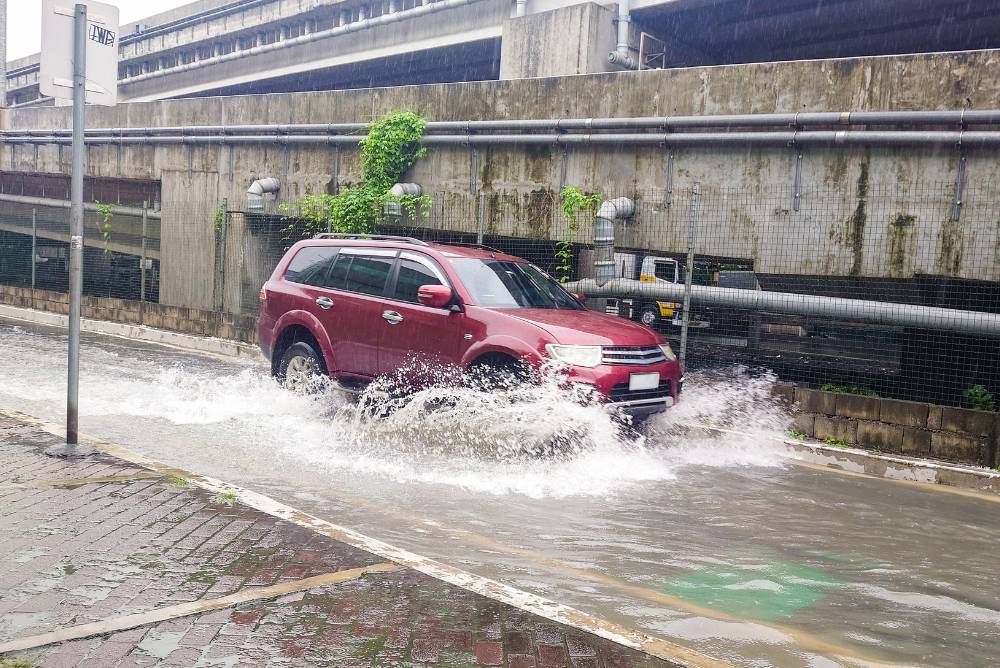
More familiar to Filipinos are acts of nature. Most recently, typhoons and floods occurred in many places, affecting livelihoods and assets. People work hard for years to acquire these assets, only to risk losing them all when disaster strikes. Earthquakes and other natural calamities are also included in the policy.
Life matters when it comes to these policies. Personal accident coverage ensures that the driver and the passengers are protected in accordance with policy terms.
CTPL is also necessary to protect not just vehicle owners, but also the people around them. And when your vehicle breaks down in the middle of nowhere, a policy with roadside assistance will come in handy.
Earlier this year, the war in the Middle East worsened, leading to the Strait of Hormuz being placed under lockdown. This caused the global gas supply to plummet, leading to outrageous price hikes in the country. Thus, more and more drivers are getting their own electric vehicles to counter fuel costs. But because the EV boom is relatively recent, not all insurance fits the needs of electric cars. Beyond the usual coverage, EV owners should consider getting a specialized policy designed to fit an EV’s requirements.
Considering that EVs run on a battery, the policy should cover the load and the charger, as it’s the main lifeline of the car. An EV insurance coverage should include the special components found only on electrified units.
If you consider what we just mentioned, you should know that choosing the cheapest option isn’t always the best choice. You have to assess your needs, compare policies from different companies, ask about other people’s experiences, and learn about the benefits of the available programs. That’s the only way you can avoid bigger headaches if something unfortunate happens.
This branded article was produced in partnership with Standard Insurance.




Comments