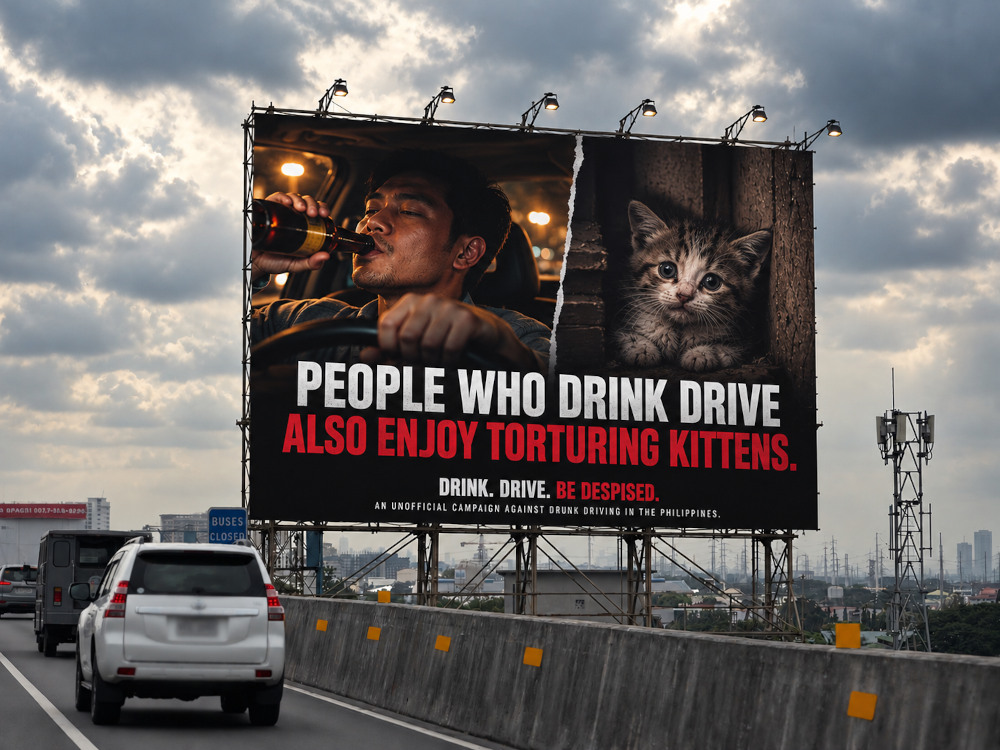

If you drove down EDSA this week and thought you saw a billboard accusing drink drivers of torturing kittens, relax. You didn’t. The supersized adverts you see on this page are fake, thought up by me while realizing that drunk driving is still way too socially accepted around here when it shouldn’t really be. If I had the money, I’d try and have them put up across the country for real, because clearly there’s a need to take the gloves off and make driving while intoxicated completely socially unacceptable—just as it already is in many other parts of the world.
By now, everyone surely knows that drunk driving is against the law in the Philippines, and Republic Act 10586 has been around long enough so that even the least attentive motorist can be expected to know its contents. The limit for the driver of a private car under 4,500kg is a blood alcohol concentration below 0.05%. For trucks, buses, jeepneys, taxis, other public utility vehicles and motorcycles, the limit is zero. Not one beer.
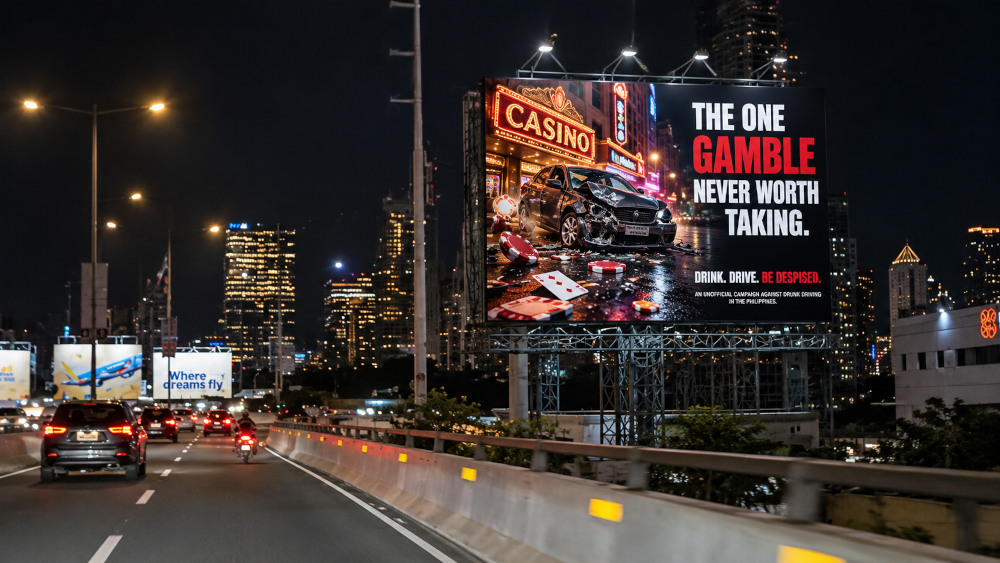
The penalties under the law are also not exactly lightweight. If nobody gets hurt, it’s three months in jail and a fine of P20,000 to P80,000. If someone is injured, it’s the Revised Penal Code penalty for physical injuries or three months—whichever is higher—plus a P100,000 to P200,000 fine. If someone dies, it’s the Revised Penal Code penalty for homicide, which on paper means 12 to 20 years, plus a fine of P300,000 to P500,000.
Plus, of course, you’ll be walking for a while (or for good), depending on if it’s the first offense (12-month ban) or a second one (permanent ban). Professional drivers lose it forever on the first transgression. Refuse the test and your license is confiscated and revoked on the spot. Vehicle owners—especially operators of buses, jeepneys, taxis and delivery trucks—can be held liable for the fine and damages alongside their driver.
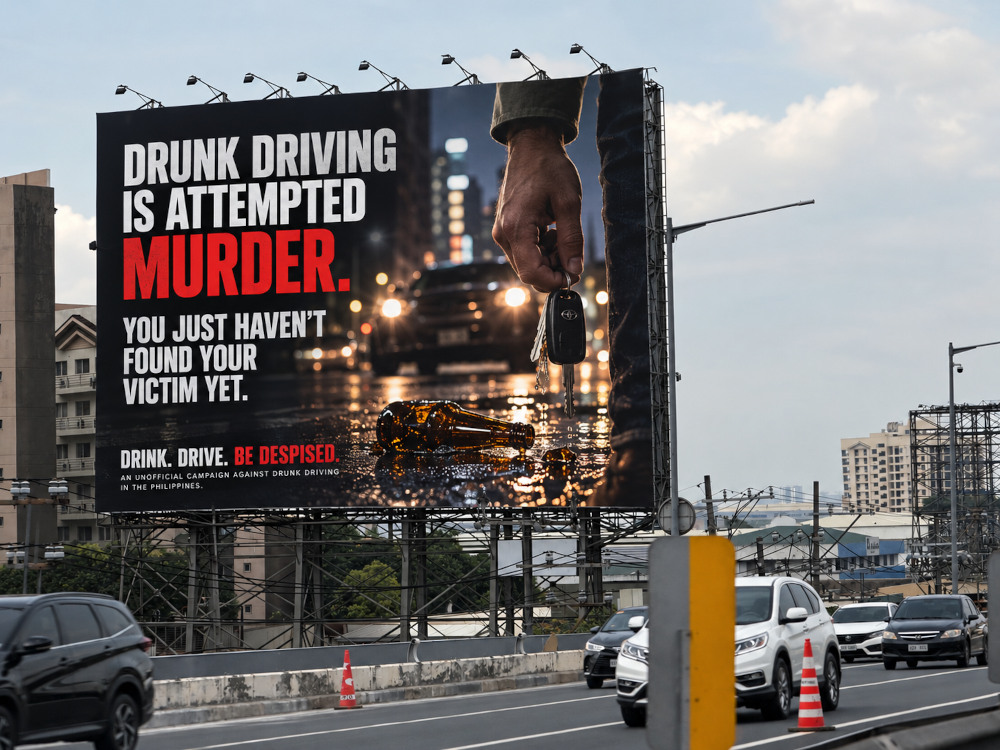
On paper then, things are looking fine, and there shouldn’t be much drunk driving going on around here—but as way too often in the Philippines, there’s a bit of a difference between having a law in place and actually (and consistently) enforcing it. And with “a bit,” I mean that we all know how laws are routinely ignored when it’s convenient or circumvented by various means. No point shirking around the issue here.
So, if having the law alone doesn’t stop people from getting behind the wheel while wasted, then we need to use a different method of enforcement. One that goes deeper and hits on another level. Drunk driving is a cultural problem around here, and culture changes when something becomes embarrassing. We need to make the practice socially unacceptable, and get to a point where you don’t even think about doing it anymore because it makes you look like a kitten-torturing lowlife in the eyes of society.
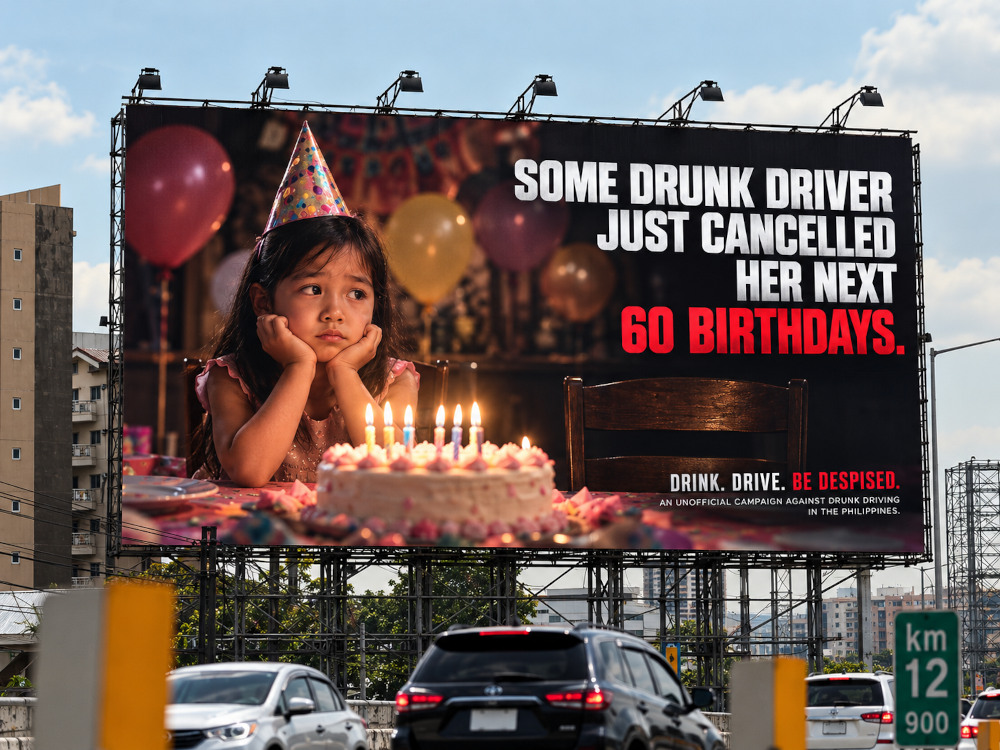
Harsh, you say? Hardly. Harsh are the consequences of drunk driving. Actually, “harsh” is the wrong word here—“terrifying” is better. Road deaths in the Philippines keep climbing. The Philippine Statistics Authority counted 7,938 in 2011, 11,096 in 2021, and 13,101 in 2023—a rise of more than 60% in 12 years, while globally the trend runs the other way. Road crashes are now the leading cause of death for young Filipinos, and 84% of those killed are men (and a large share of them involve alcohol).
Exactly how large is harder to say, because for a long time nobody recorded it properly. In 2006, the Philippine National Police put the share at 1%, a figure experts quickly called absurd. In the first seven months of 2014, 99% of the 23,189 crashes logged in Metro Manila had no cause recorded at all, but better data has emerged since. Congressional figures show 5,213 of the 18,735 road deaths between 2015 and 2019 were alcohol-related (about 28%). A University of the Philippines Manila study also puts it at about a quarter. Applied to 2023’s toll, that’s more than 3,000 people a year—eight or nine every single day.
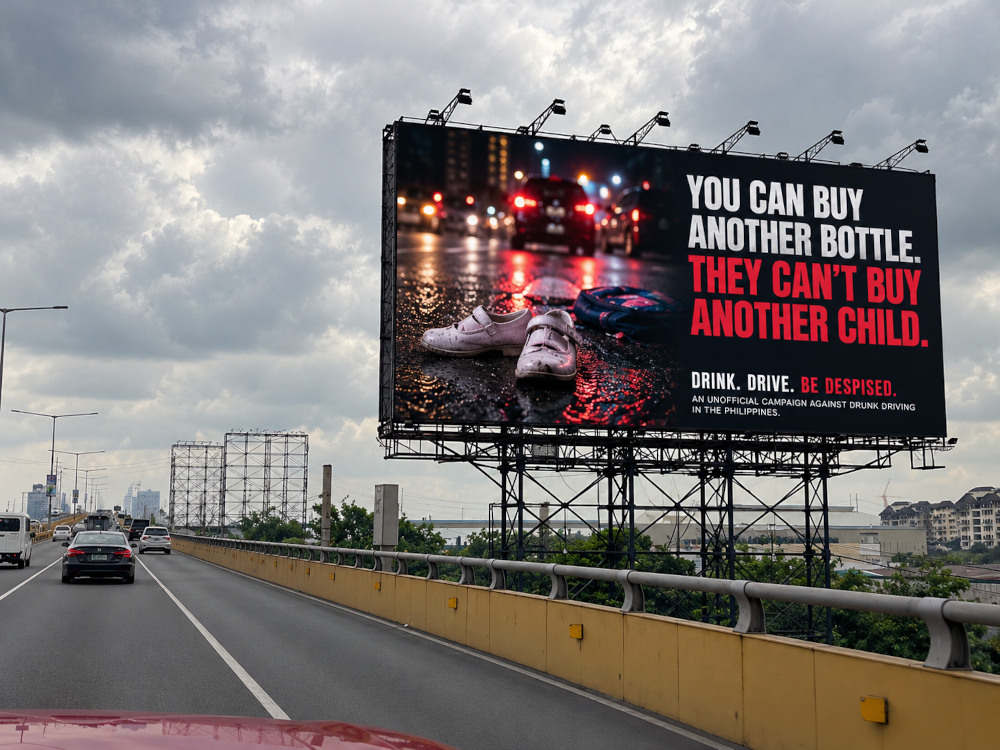
Alcohol also makes crashes far deadlier. The UP Manila study looked at Metro Manila crash records from 2005 to 2020. Where alcohol was suspected, the odds of the driver dying were about nine times higher, and the odds of a passenger dying nearly 20 times higher. Half of those crashes involved a motorcycle. And we know people are doing it.
A Department of Health survey found that up to four in 10 Filipino drivers admit to driving after drinking at least sometimes, rising from 31.5% in mid-2023 to 41.3% in the pre-Christmas months. Among men, it’s higher still. One in four believes it’s fine to drive after three drinks if you don’t feel drunk, and I bet you know people in your own social circle who think the same way or even drink-drive on a regular basis.
Over Christmas and New Year 2024-2025 alone, the DOH logged 606 road crashes in its monitoring, 115 of them involving drunk drivers. In all of 2024, the LTO revoked 736 licenses under RA 10586. Set that against the scale of the problem, and it’s a rounding error. Next to the human cost, driving while sloshed also comes with costs that can be put into pesos and centavos. Road crashes cost the Philippines somewhere between 2.6% and 4.1% of GDP every year. Drunk driving’s share of that likely runs to around P100 billion.
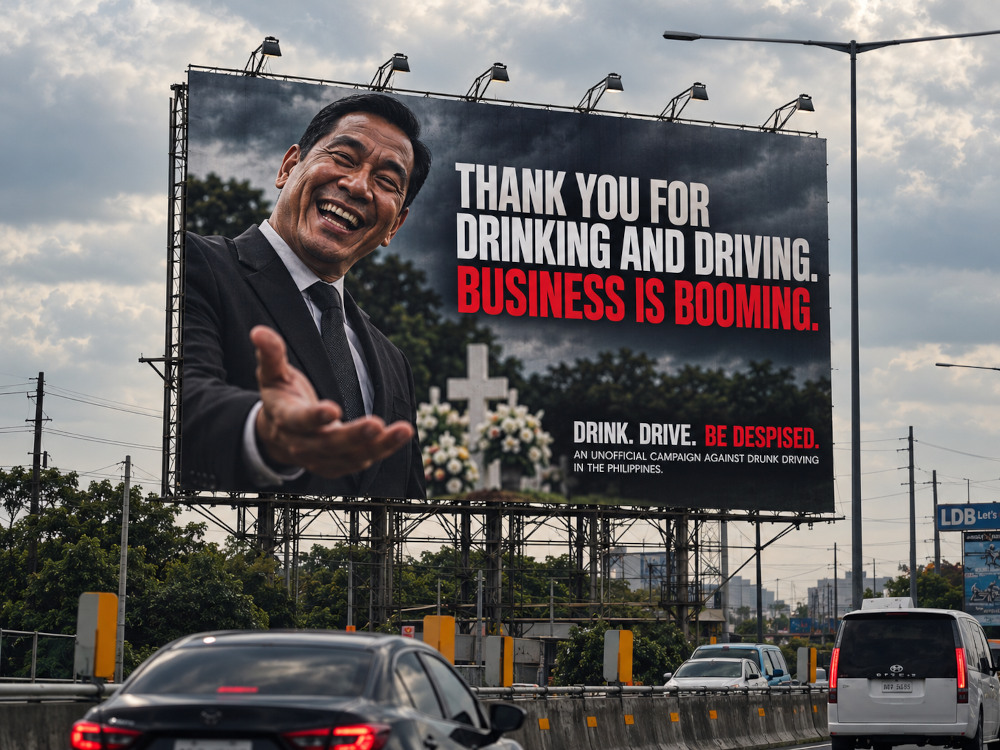
The money is only part of it. Of everyone killed or injured, 77% are of working age, between 15 and 64. These are breadwinners and OFWs home for the holidays. When they die or end up disabled, families fall into poverty. Public hospitals end up covering a quarter to three-quarters of victims’ treatment costs, which means every taxpayer chips in. The flip side is the good news. The World Bank estimates that halving road deaths would lift Philippine GDP per capita by 7% to 22% over 24 years. Few policies come with that kind of return. Tougher laws would help, and random breath testing would help more, but the fastest fix costs nothing: Make drunk driving embarrassing.
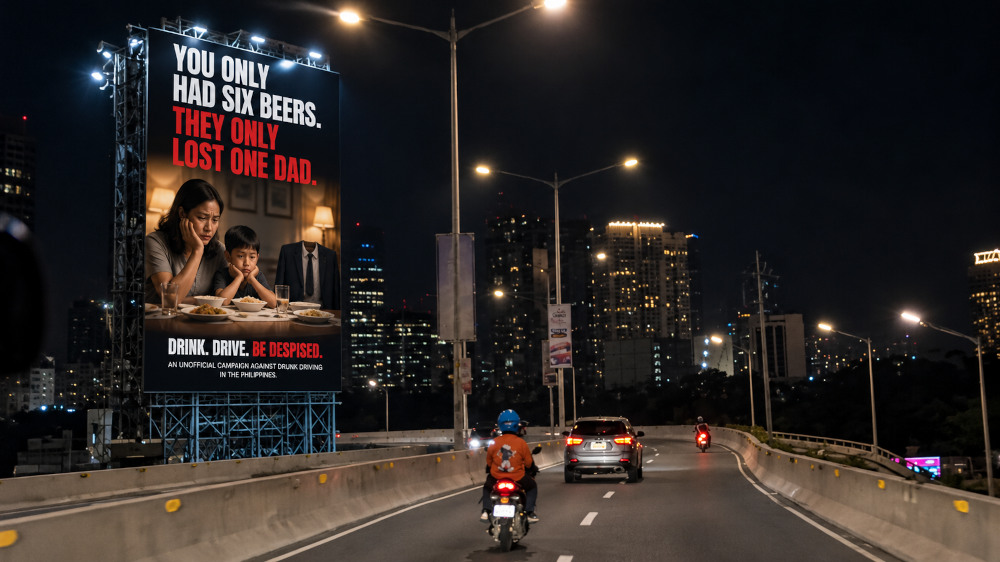
The UK, Australia and much of Europe, where drunk driving is already socially unacceptable, didn’t get there through fines alone. They did it with decades of campaigns that made the drunk driver the villain of the evening, not the cool heartthrob. In those countries, “I’m driving” is all you need to say and nobody will push another glass across the table. Grabbing the keys after four beers gets you looks—not laughs—and being seen to get into your car drunk gets you arrested real quick with real consequences. That’s what I want for the Philippines.
So yes, the billboards might be harsh, but the shock effect is needed. As are simple actions by everyone, especially now, in the run-up to the merrymaking period. All of us can help to make the roads a safer place by calling out drunk drivers; by making the Designated Driver a respected role and not a joke; and by simply doing the right thing and not drive inebriated. Unless you’d rather be torturing kittens?





Comments