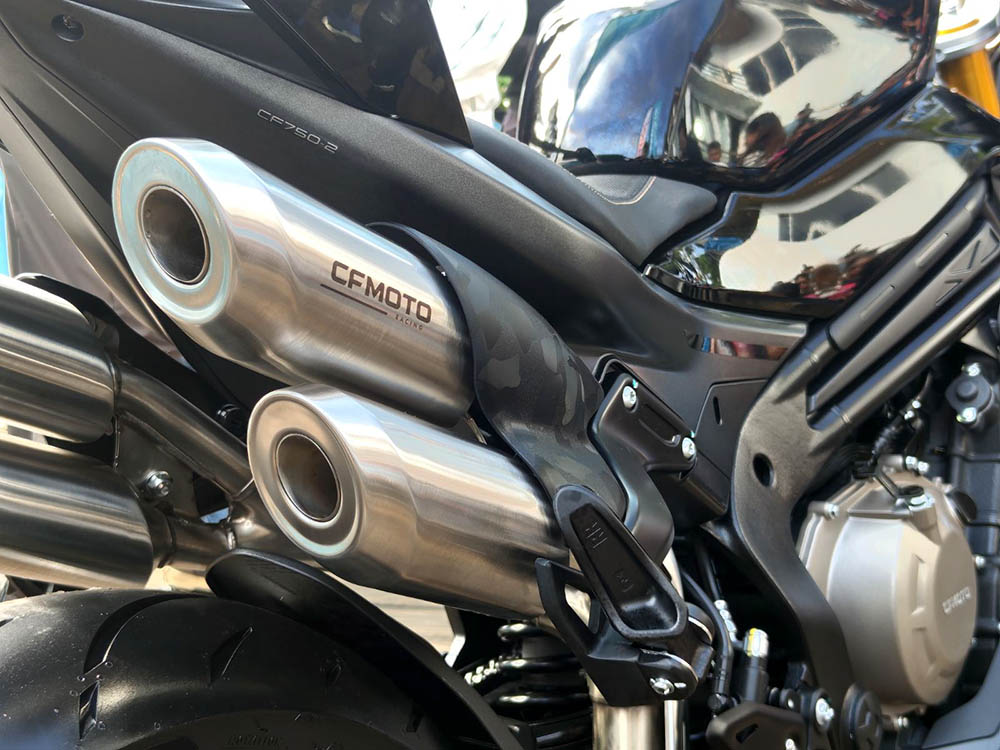

If you ride a motorcycle in the Philippines long enough, you eventually hear it: the unmistakable bomba of a modified exhaust echoing through the street. For some riders, it’s the sound of personality. For others, it’s noise pollution. But for the Land Transportation Office, it’s something that needs control.
The LTO has released a clarification about aftermarket motorcycle mufflers and the role of Private Motor Vehicle Inspection Centers (PMVICs). The statement was supposed to answer questions; instead, it created more confusion among riders.
The key rants? Even if your motorcycle passes the 99dB test at a PMVIC, you may still be apprehended on the road if your muffler is considered an “unapproved aftermarket version.”
Naturally, riders began asking the obvious question: What exactly counts as “unapproved”?
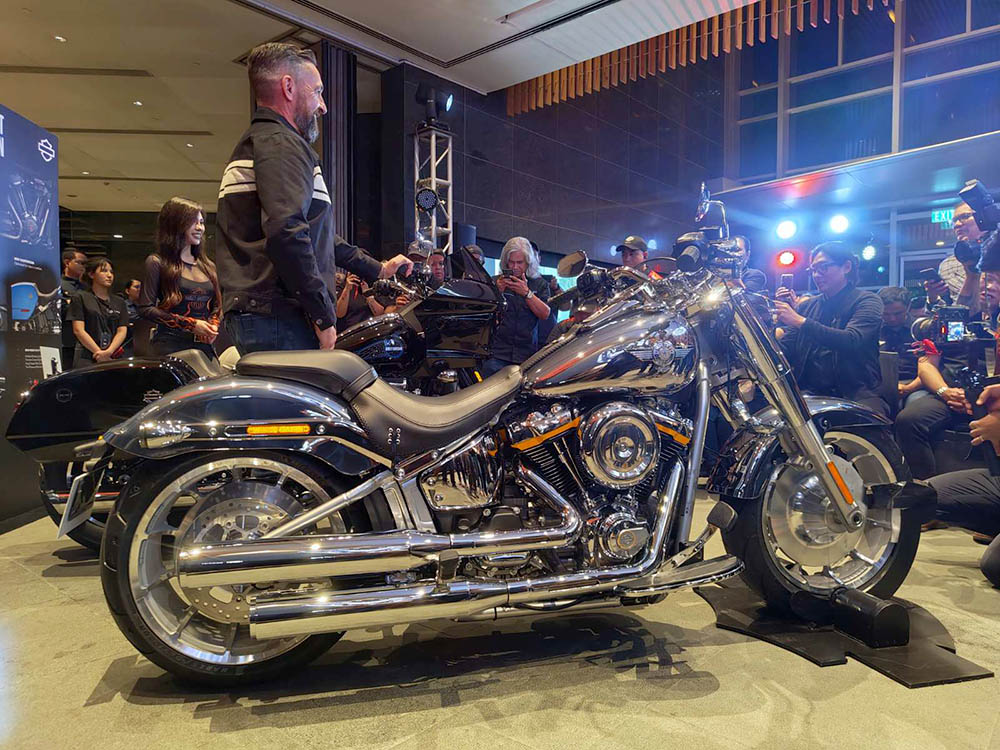
Passing the test—but still illegal?
According to the LTO, PMVIC inspections only measure exhaust noise. Their job is to determine whether the motorcycle stays below the allowable 99dB limit.
Our kababayans are generally adaptable by nature. They easily could put back the aftermarket exhaust after the test, right? A bike may pass the sound test and still be flagged for having a modified or replaced exhaust later on.
From a regulatory perspective, the answer is more complicated.
The emissions side of the story
Before writing about motorcycles, I had spent time as a product planner for a manufacturer. One of the biggest responsibilities in that role is making sure every motorcycle sold complies with environmental regulations.
In the Philippines, emissions compliance is overseen by the Department of Environment and Natural Resources through the Environmental Management Bureau. Since January 1, 2016, the country has required all new vehicles to meet Euro 4 emission standards.

These standards are not just paperwork—they influence how motorcycles are engineered from the factory.
A big part of that system is the catalytic converter, which reduces harmful gases like carbon monoxide, hydrocarbons, and nitrogen oxides before they exit the exhaust.
But here’s the reality in the big-bike community: Many owners remove it for more horsepower and a “panty-dropping” exhaust note.
But it comes with consequences.
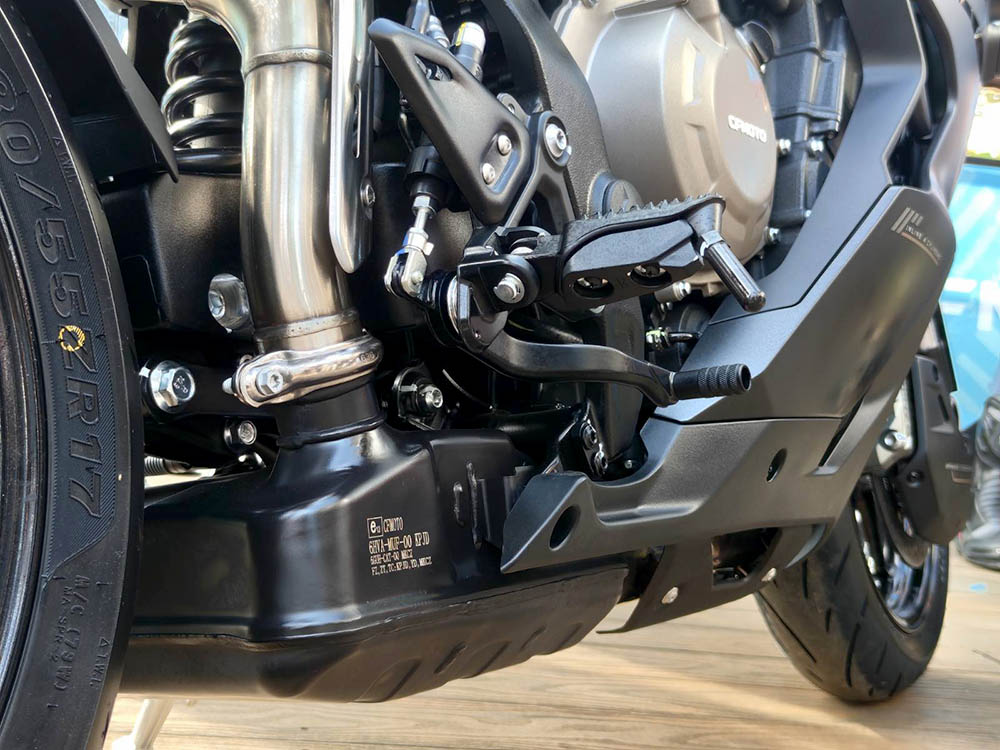
Without the catalytic converter, engines can run with improper back pressure. Fuel mixtures may become richer. Fuel economy can suffer. And most importantly, toxic emissions go straight into the air.
And the loud pipes? You attract more men, in reality.
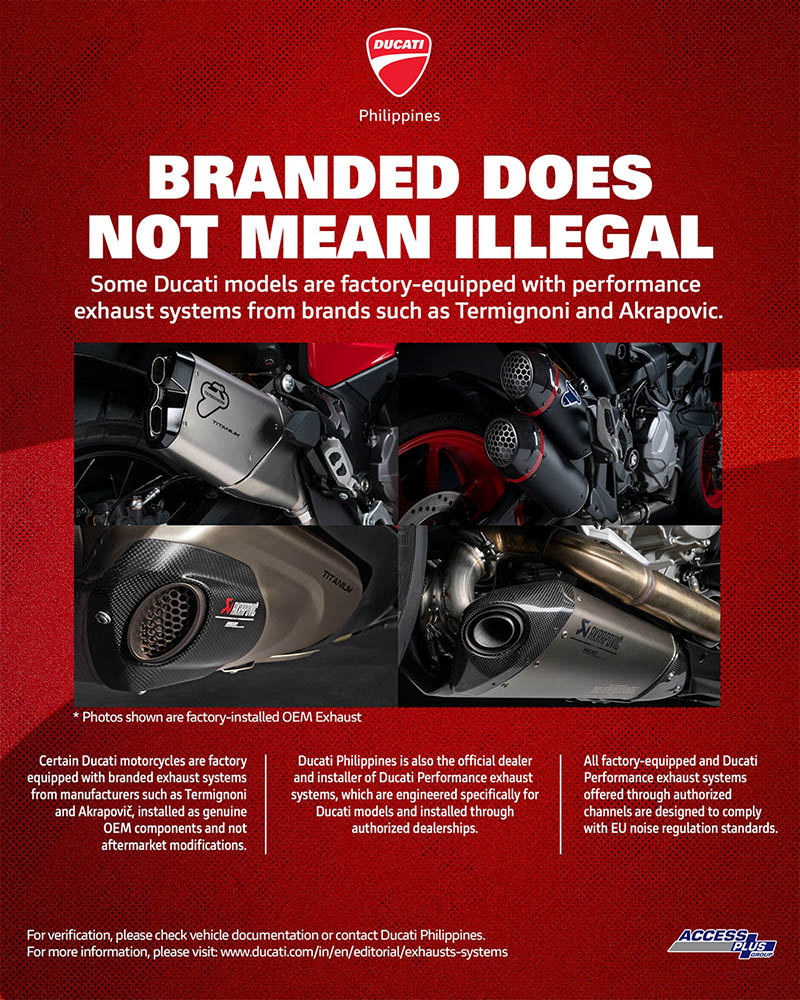
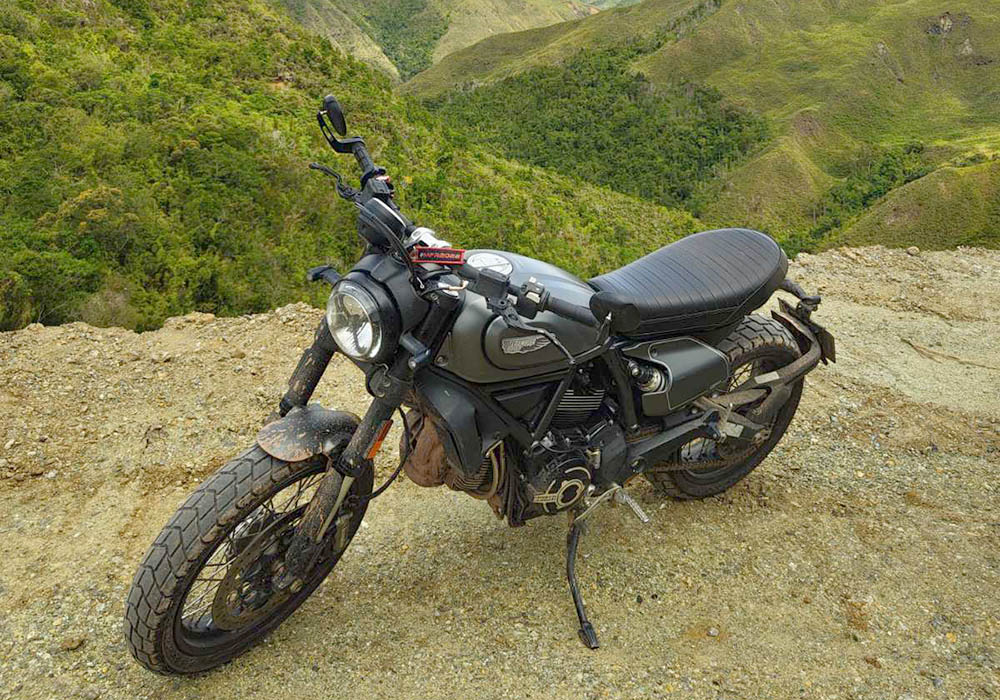
Ducati Philippines recently issued a statement that not all branded exhaust systems are aftermarket modifications.
Some motorcycles come from the factory with performance exhausts from companies like Termignoni or Akrapovič. These systems are engineered alongside the motorcycle, and meet European noise regulations.
In some cases, these exhausts are also sold through official dealer channels as part of the manufacturer’s performance catalog.
But the term “unapproved aftermarket muffler” remains vague.
That’s where people started guessing.
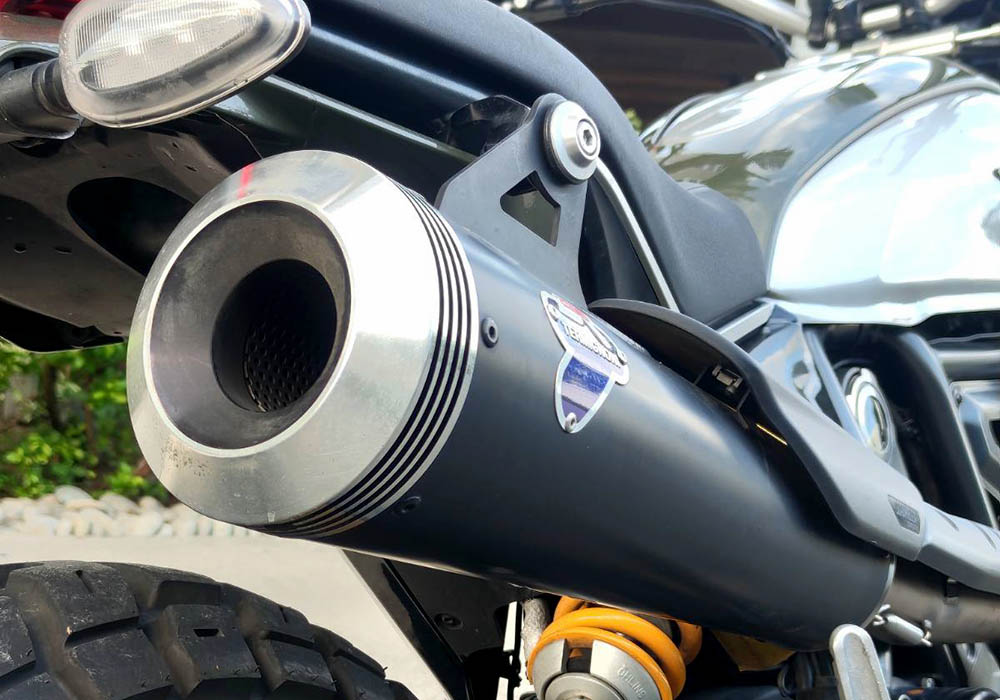
Responsible sellers
Businesses selling aftermarket products should also act responsibly by not promoting unauthorized parts as compliant for the sake of profit. Misleading claims that a product meets standards when it does not only create confusion, leaving riders vulnerable to apprehension despite believing that their upgrades are legal.
The logical solution isn’t stricter enforcement alone—it’s about clear definitions.
If the LTO wants to regulate exhaust modifications effectively, it may need closer collaboration with motorcycle manufacturers, distributors, and dealers. It defines what to buy or sell. Simple as that.
Now, let’s make a group chat, shall we?







Comments