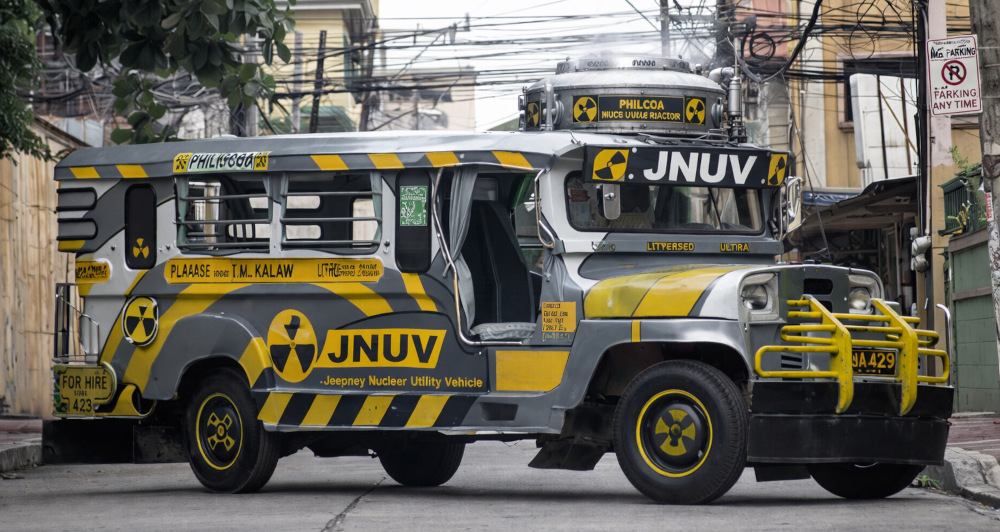

With fuel prices going stratospheric, the government has been forced to put on its thinking hat in an effort to resolve the crisis—and it appears it has found a solution. In a media briefing held in Malacañang earlier today, boffins from the newly established Bureau for Low-Emission Atomic Street Transport (BLAST) unveiled what they are calling “the future of clean and affordable public transport,” and it comes in the form of what some have already dubbed the “nuclear jeepney.”
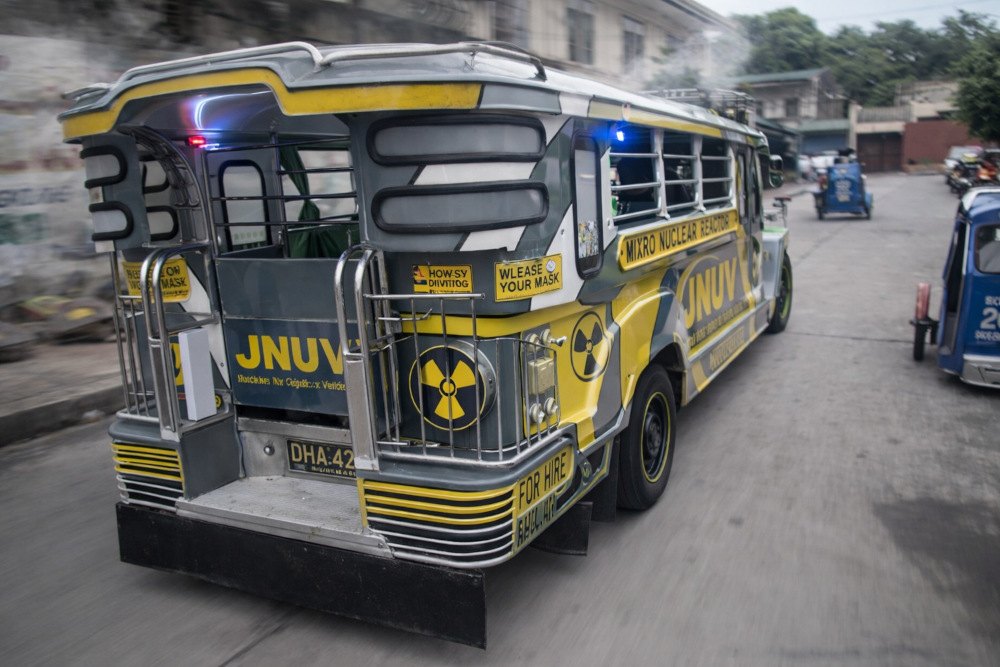
The official name of the prototype vehicle you are looking at is the Jeepney Nuclear Utility Vehicle (or JNUV for short). It works by swapping its usual Isuzu Diesel unit with an electric motor, which in turn is powered by a small nuclear reactor positioned in a protective casing on the roof. While some onlookers voiced safety concerns at the public launch, a spokesperson from the Metropolitan Energy and Logistics Transport Development Office for Widespread Nuclearization (MELTDOWN) was quick to reassure the public.
“The new JNUV has been extensively safety tested and conforms to all international automotive and nuclear safety standards,” he said. “It offers cheap, reliable and safe transportation in times when conventional fuel supplies have shown to be volatile and expensive.”

To call the JNUV fuel-efficient would be a massive understatement, as the vehicle only has to be refueled once every 15,000,000km. Thanks to its vastly increased power output, it could also go a lot faster than its diesel equivalent, with the theoretical top speed at around 500km/h. For safety reasons, all units will be limited to 80km/h on highways and 50km/h on city roads.
All JNUVs are based on current jeepney models, and conversions of existing units will be carried out at the original jeepney factories of the various manufacturers (and are planned to take no longer than one day). Drivers can drop off their diesel jeepneys in the morning and drive home with atomic power at night. The cost for the conversion will be covered by the government under the Jeepney Modernization program.
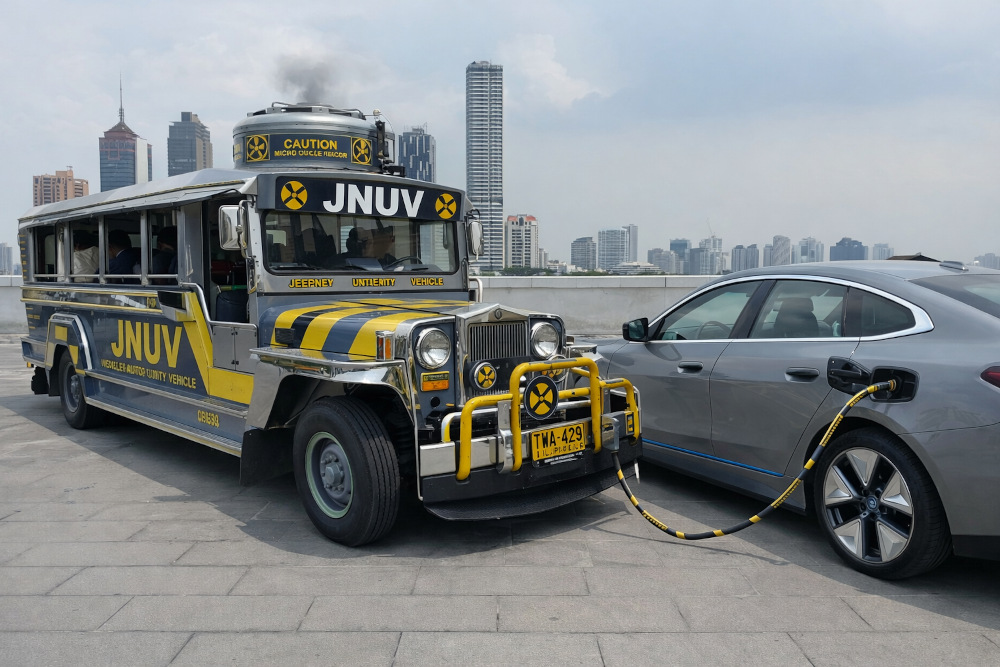
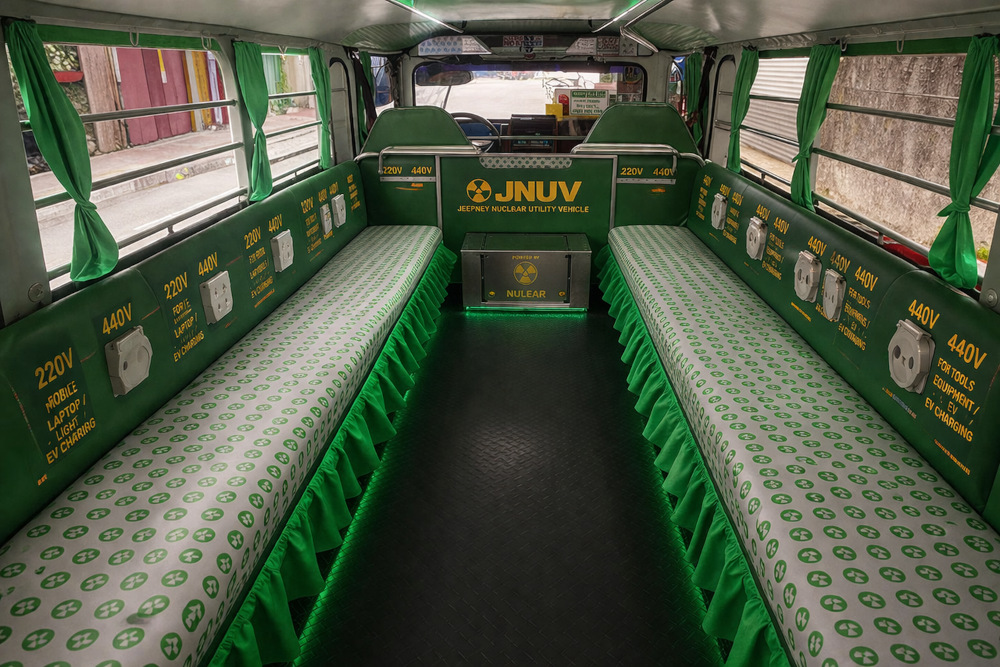
Thanks to the higher energy output, all JNUVs will also have air-conditioning (which passengers on test rides have described as “positively arctic”) and 220V-440V power outlets that can be used for anything from charging mobile phones to operating industrial equipment. JNUVs will also be utilized as charging stations for electric cars when they are not plying their routes.
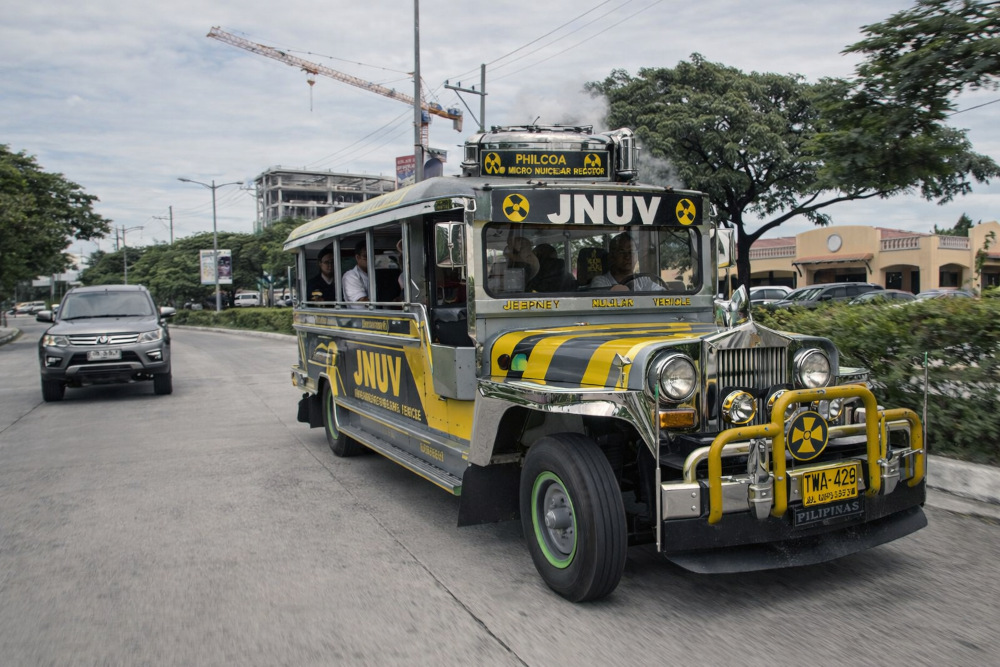
With no fuel costs to worry about, the new JNUV is bound to be a hit with operators and commuters alike. And were it not April Fool’s Day today, this concept would have been a heaven-sent idea.



Comments