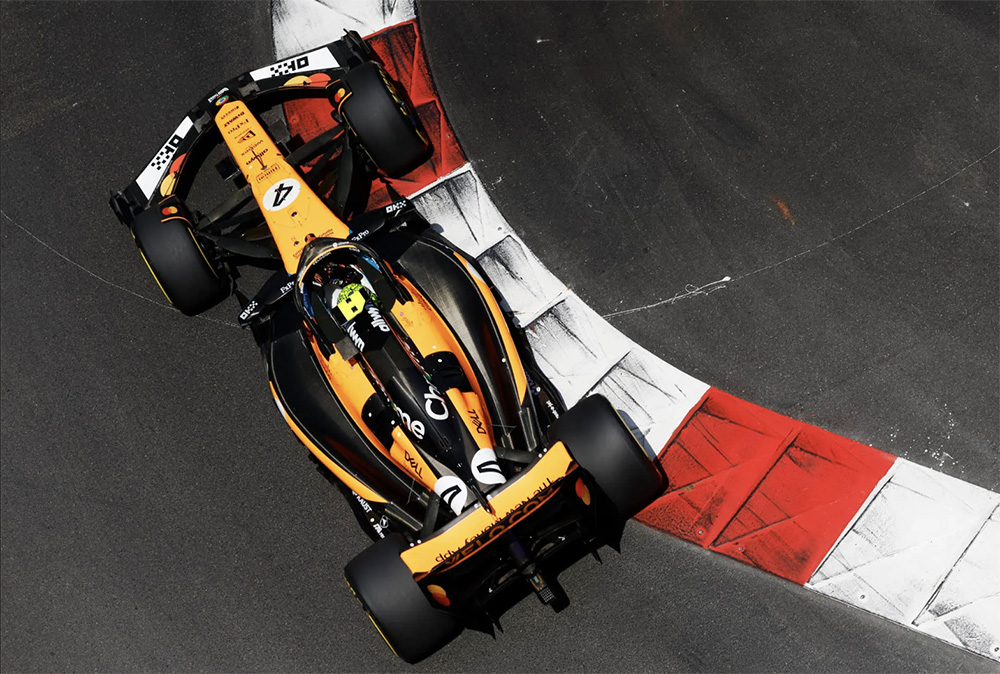

The mandated two-stop strategy for the Monaco Grand Prix.
So, did it work? Did it spice things up? “Shenanigans,” said Formula 1 pundit Martin Brundle. “The focus was on pitting rather than on racing.”
The FIA will have to think this rule over, as evidenced by the tactics in the race. But can you blame the teams? The squabble for points is that tight, particularly around here.
Here are five points that we’ll think back to.
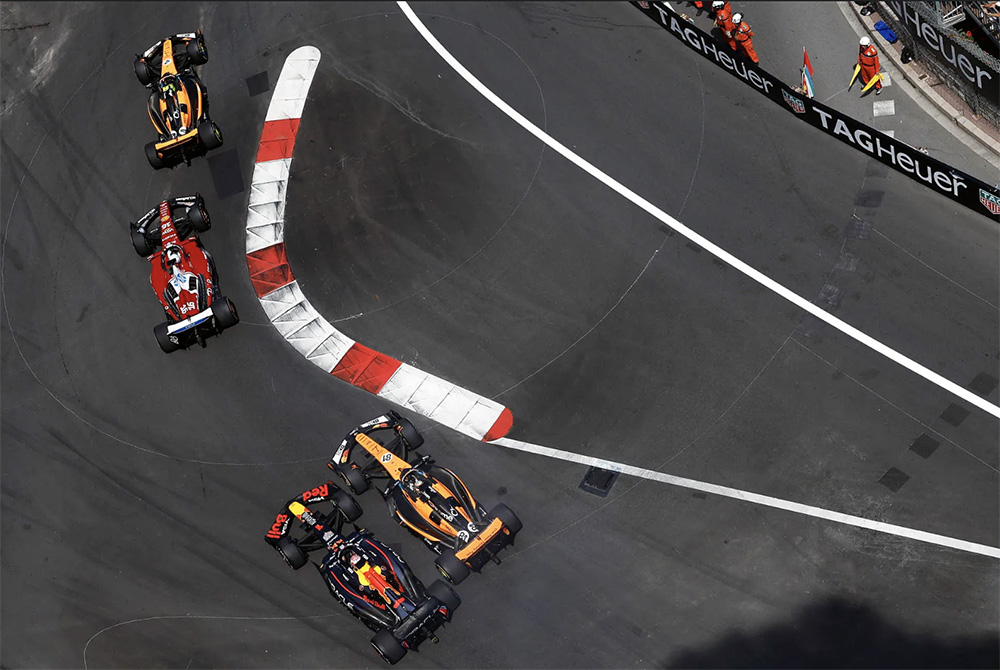
1. In Monaco, the real race is on Saturday. Local boy Charles Leclerc (Ferrari) showed his pace and topped all three final practice sessions. A sign of things to come, and could he win for a second time on home soil?
In qualifying, the closing stages was super tight, with Oscar Piastri (McLaren) clocking in 1:10.129. Next came Charles putting in 1:10.063. Only to be beaten to pole in the end by Lando Norris (McLaren) with 1:09.954, just 0.103 of a second clear.
You can tell by Leclerc’s shout in frustration, knowing that P2 wasn’t going to be good enough.
Sure, all was not lost if you have a better start. But with F1 cars so much bigger now, getting passed is close to impossible.
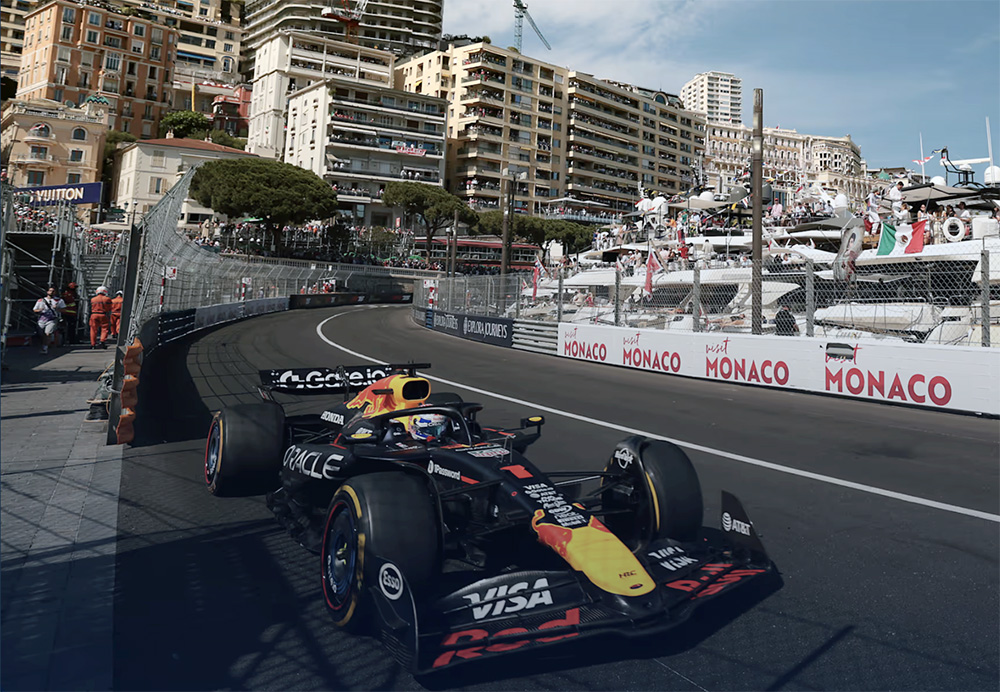
2. Max had nothing to lose. Max Verstappen (Red Bull) qualified P5, and with Lewis Hamilton’s (Ferrari) three-place grid penalty for impeding the Red Bull driver in qualifying, he moved up to the second row in P4.
In the race, Max had a good start and got side by side with Piastri (who qualified in P3) at Sainte Dévote (Turn 1). But as a tight right-hand turn with Max on the outside, he had to concede.
It was clear that Norris, Leclerc, and Piastri had the pace ahead, and it was in the pit stops where Verstappen could mount a challenge.
With one more stop to complete, Max remained in the lead and could control the pace of the race. By doing so, it allowed Leclerc to get right behind Norris and pile some pressure, with Piastri closing in as well.
Verstappen had nothing to lose. With the mandatory second stop, that would’ve brought him back to his starting position of fourth. And if he didn’t pit, he would’ve been given a 30-second penalty for failure of completion, where he still would end up in fourth with Hamilton over 50 seconds in fifth. Max pitted on the very last lap.
At least it spiced up the racing for some 30 laps.
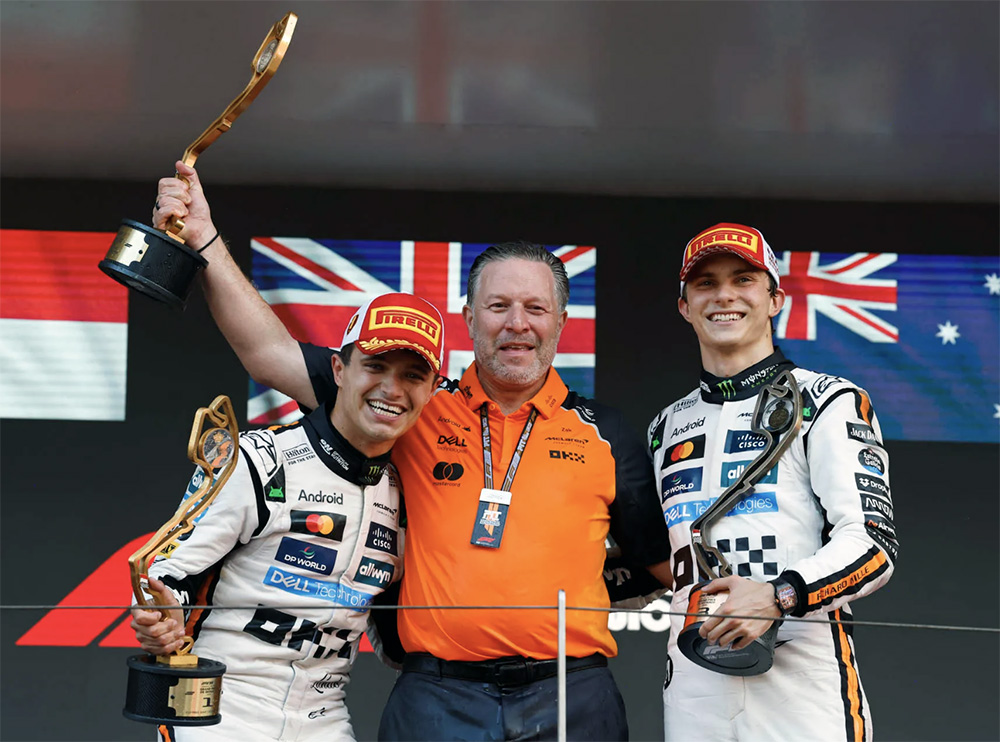
3. McLaren won, but only just. It has to be said that the biggest winner of the Monaco weekend was Norris, claiming the all-important pole and victory, after which he replicated Jenson Button’s line (after winning with Brawn GP in 2009) of “Monaco, baby!”
The win (his second of the season) brings him to within three points off Piastri (who finished third), and extends his lead over Verstappen.
Piastri leads with 161 points, Norris with 158, and Verstappen on 136.
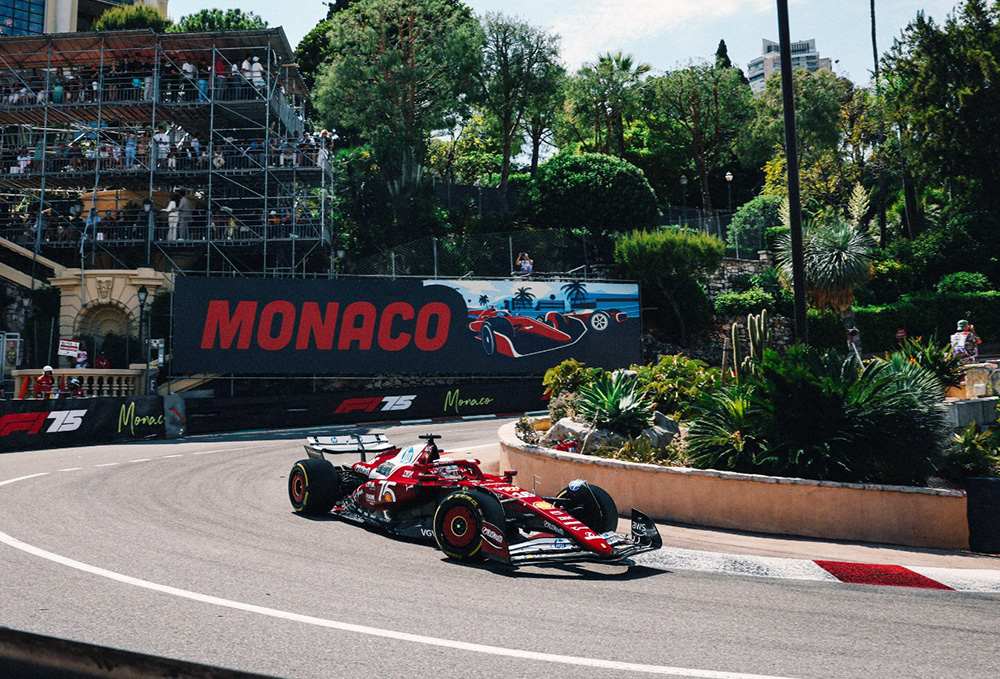
4. Mixed fortunes from Mercedes, Red Bull, and Ferrari have brought them much closer in the standings. The qualifying woes and the non-points finish of Mercedes, the fourth place of Verstappen, and Ferrari’s second- and fifth-place finishes brought the three teams within touching distance of each other in the constructors’ standings.
Red Bull brought home 12 points (which likewise aids Verstappen’s title defense), while Ferrari scored 28 points (18 for Leclerc, and 10 for Hamilton).
There’s now a five-point difference between them, with Mercedes on 147, RBR on 143, and Ferrari with 142 points.
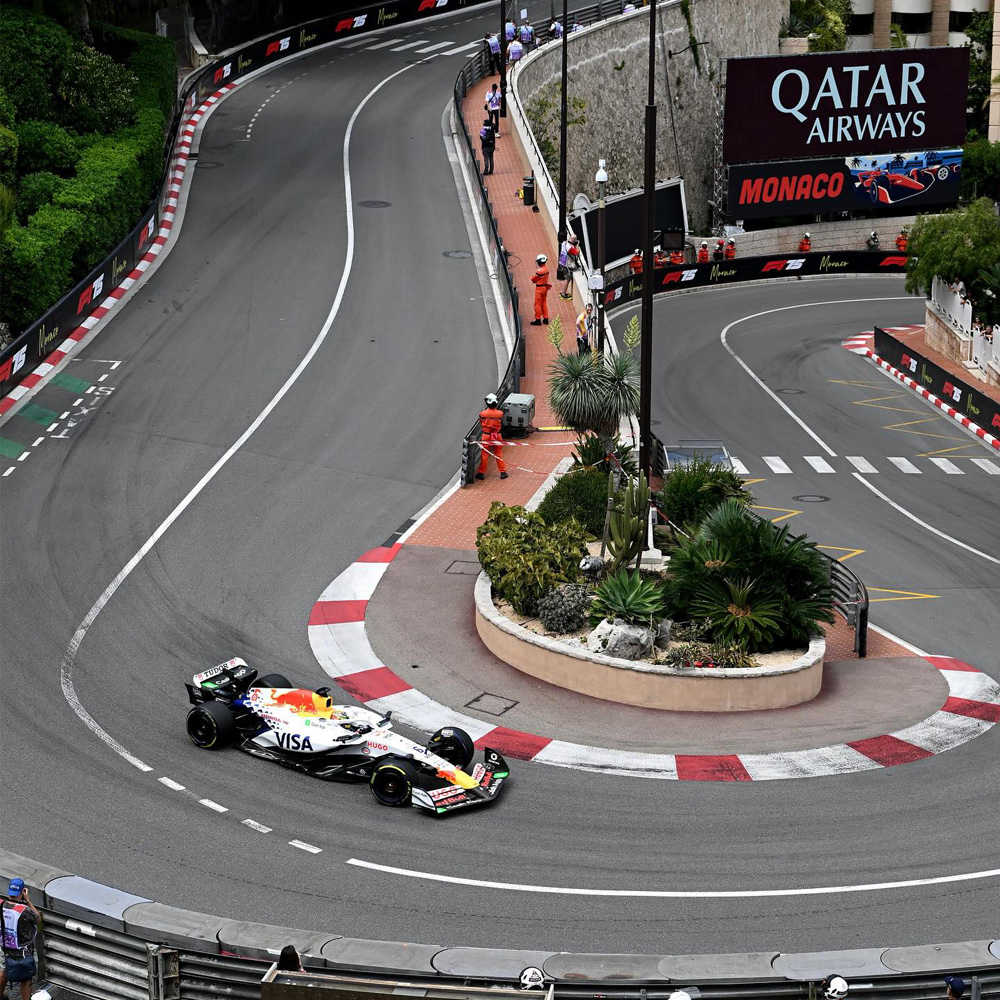
5. Racing Bulls backed the pack up, with Williams following suit. Some teams were going to take advantage of the mandatory two-pit stop rule to make their strategy work and try to score important points.
But they had to qualify well first, of course. One such team was Racing Bulls, with Isack Hadjar and Liam Lawson starting in fifth (after Hamilton’s penalty) and ninth, respectively.
In the early part of the race, the gap between Hadjar and Lawson had gone over 20 seconds, along with those behind Lawson. Hadjar came in, with the strategy to be repeated for the second stop.
Lawson had to go slow enough to help Hadjar build a gap, but not too slow to get overtaken. And going slow makes you lose concentration.
After Hadjar completed both his stops, Lawson stepped on it. With the Williams duo behind, it replicated the tactics with Alex Albon and Carlos Sainz. That aided Lawson completing his stops without losing track position.
With Sainz and Albon rounding out the top 10, both likewise went slow enough to assist each other for points, with the Spaniard later letting his Thai teammate switch positions for ninth. To be fair, we did expect Williams to be strong in Monaco.
Regarding the tactics, Sainz commented post-race that it was not the kind of racing they wanted. But had they not done it, they “would’ve finished 19th and 20th.”
Hadjar finished in sixth and Lawson in eighth (the Kiwi’s first points finish this season), Racing Bulls’ best finish of the season so far. More importantly, they were the best of the rest after McLaren, Ferrari, and Red Bull.
VCARB bagged 12 points (eight for Hadjar, and four for Lawson), bringing the team to within four points off Haas for sixth in the standings (22 to 26), which also finished with a strong result of its own with Esteban Ocon in seventh.
This weekend is the Spanish Grand Prix, where the flexi-wing clampdown takes place. Will it give the teams status quo, or will it turn things around to someone else’s favor?






Comments